

Low Willingness to Switch – Germany Remains a DSL Nation
Fiber rollout in Germany continues to stall, as many users remain tied to DSL networks dominated by Deutsche Telekom. Competitors are pinning their hopes on the promised gradual shutdown of DSL infrastructure. …
Fiber rollout in Germany continues to stall, as many users remain tied to DSL networks dominated by Deutsche Telekom. Competitors are pinning their hopes on the promised gradual shutdown of DSL infrastructure.
TL;DR
- Deutsche Telekom still dominates the copper-based DSL network and benefits from low customer churn.
- In 2025, only €6.9 billion will be invested in gigabit-capable networks – significantly less than the €8.5 billion spent in 2022.
- Of 39.2 million fixed-line connections, 23 million use DSL, while only 6.1 million have fiber.
- “Home Passed” often means theoretical availability; many connections remain unactivated.
- Telekom plans around 3.8 million fiber connections by 2025; currently, it has 1.5 million with an activation rate of just 14.9%.

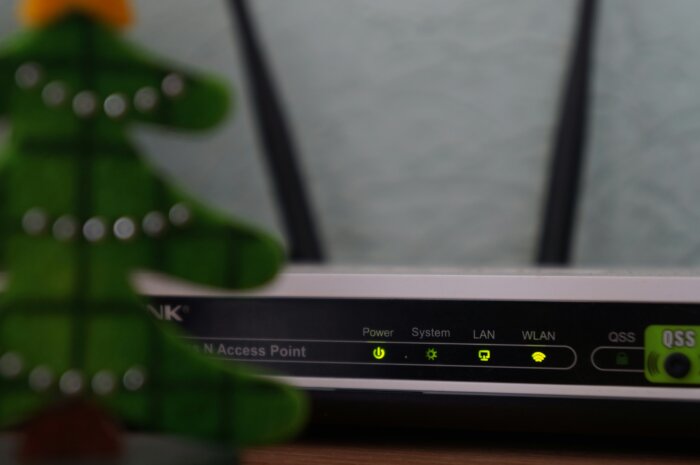
Despite fiber availability, many still rely on DSL – to Telekom’s advantage and the detriment of nationwide rollout. Image source: Unsplash / thomas jensen.
Deutsche Telekom, once a state monopoly, still holds significant control over Germany’s network infrastructure, owning or managing access rights to much of the country’s copper DSL lines. Competitors – who dominate the fiber market – hope to benefit from Telekom’s pledge to gradually phase out this legacy infrastructure.
According to a newly published market analysis commissioned by the VATM (Association of Telecommunications and Value-Added Services Providers), providers will invest only about €6.9 billion in mobile and gigabit-capable infrastructure in 2025 – well below the €8.5 billion invested in 2022. Deutsche Telekom alone will spend €5.2 billion on telecom infrastructure, significantly more than in previous years, as reported by Heise Online.
DSL Still Powers 23 of 39 Million Connections
Competitors face not only rising costs but also shrinking opportunities for large, contiguous expansion areas. According to Heise, the potential is there: of Germany’s 39.2 million fixed-line connections, 23 million are DSL-based and 1.7 million rely on narrowband lines. Another 8.4 million households use upgraded cable TV infrastructure, while only 6.1 million enjoy fiber connectivity.
Many readers might wonder: “Wait, I’ve seen very different figures.” Indeed, providers frequently tout record-breaking numbers for broadband coverage. However, these typically refer to “Home Passed” connections – lines that theoretically reach a building – while the number of “Homes Activated,” meaning actually subscribed and active connections, remains far lower.
“Home Passed” ≠ “Home Activated”
In reality, only 1.5 million households – or 14.9% – of those reachable by Deutsche Telekom’s fiber network by end of 2024 have actually subscribed to high-speed fiber services. Among competitors, the VATM analysis shows roughly 3.7 million activated connections, or 33.6% – about two and a half times higher. By end of 2025, Telekom aims to offer 2 million fiber connections plus 1.8 million “Homes Connected,” compared to approximately 8.8 million households that are only theoretically covered on paper.
For Telekom, DSL – whether operated directly or via leased line capacity – remains a highly profitable business. This is further reinforced by consumers’ general reluctance to switch providers. Consequently, the study concludes that DSL will remain the dominant fixed-line technology through 2030 across all forecast scenarios. Even as monthly data consumption per fixed-line user rises from 321.5 GB to 342.7 GB, most customers remain satisfied with VDSL connections offering 250 Mbit/s – more than sufficient even for 4K streaming.
Frequently Asked Questions
Why does DSL remain dominant despite being slower?
DSL will stay the leading technology through 2030 because many users are content with VDSL speeds of 250 Mbit/s. Low willingness to switch strongly benefits Telekom.
How much will be invested in network expansion in 2025?
Around €6.9 billion will be invested in mobile and gigabit-capable infrastructure in 2025 – significantly less than the €8.5 billion spent in 2022.
What’s the difference between “Home Passed” and “Homes Activated”?
“Home Passed” means a connection theoretically reaches the building. “Homes Activated” refers to actual, subscribed connections – which are far less common.
How many households currently use fiber in Germany?
Currently, 6.1 million households have a fiber connection: 1.5 million via Telekom and 3.7 million via competitors with activated services.
Why would competitors benefit from Telekom’s network expansion?
Competitors dominate the fiber market and stand to gain if Telekom shuts down its copper network. However, high DSL usage is currently delaying this transition.
Editor's Picks
cloudmagazinAPI-First: Why modern cloud architectures live or die by API designcloudmagazinPretext: Does a new JavaScript library solve a 30-year browser problem – or is it just hype?cloudmagazinAWS vs. Azure vs. Google Cloud 2026: An honest comparison for DACH enterprisesMore from the MBF Media Network
SecurityToday | MyBusinessFuture | Digital Chiefs
Header Image Source: Unsplash / Misha Feshchak
Translated from the German original using artificial intelligence. The German version is authoritative.


