

Mini-PCs Supplant 1U Servers: Edge
Mini-PCs and NAS are displacing 1U servers in German edge racks. What cloud teams must now adjust regarding topology, TCO, and telemetry.
7 min read
Starting in February 2026, three mid-sized data centres in Germany will no longer house 1U servers in lower-height units. Instead, they’ll be packed with stacks of MinisForum MS-01, BeeLink GTR and Synology DS1823+ appliances—roughly 14 devices per rack, drawing under 700 W total, delivering 256 cores and 1 TB of RAM. These aren’t lab curiosities; they’re live Edge nodes powering image caching, OCR and on-prem inference. Cloud providers across DACH are quietly erecting a second layer beneath their hyperscaler architecture, and the leverage isn’t in data-centre marketing—it’s on the TCO sheet.
05/07/2026
Key Takeaways
- Rack-mounted mini-PCs aren’t a hobby: The MS-01 with i9-13900H, 64 GB RAM and Dual-10G-SFP+ sips 1.8–2.4 W per vCPU in live Edge setups, while a Dell R650 with Xeon Silver gulps 6–8 W. Over three years, the TCO gap is anything but cosmetic.
- The NAS graduates to Edge storage: Synology DS1823+ and QNAP TS-h1090FU run ZFS, NVMe cache and 25 GbE as local object stores. Latency between cloud buckets and on-prem reads averages 40–90 ms—enough to swing vision and OCR pipelines.
- Telemetry and out-of-band access are the risks: Mini-PCs lack iDRAC and BMC consoles. Unless operators plug the gap with Tailscale, Twingate or custom OOB solutions, the first Frankfurt node that goes dark will trigger operational headaches.
Related:A2A Protocol 1.2 goes live / AWS & Google Cloud multicloud preview
Why mini-PCs and NAS in the rack suddenly make sense
What is edge computing in a data center? Edge computing in a data center relocates processing and storage loads from Tier-1 central servers to numerous small, distributed nodes located close to the workloads. In DACH setups, the edge layer is increasingly being built with mini-PCs (MinisForum MS-01, BeeLink GTR) and NAS systems (Synology, QNAP) instead of traditional 1U servers, as power consumption, latency, and delivery times work against large-scale infrastructure.
The story begins with an energy bill. Since mid-2025, electricity prices in German colocation facilities have held steady between €0.32 and €0.38 per kWh. A Tier-1 server with two Xeon Silver 4416+ processors and 256 GB of RAM draws between 350 and 420 watts under typical mixed workloads. An MS-01 with an i9-13900H, 64 GB of RAM, and an NVMe drive consumes between 32 and 58 watts, peaking at roughly 95 watts under maximum load.
The second trend comes from the workload side. Edge applications are already productive, as demonstrated in the practical test of the ThinkEdge SE60n Gen 2: image and document classification in logistics, OCR on invoices, local inference for voice control, and small vector databases for retrieval pipelines. These workloads don’t need 96 vCPUs on a single machine—just 8 vCPUs across 14 locations. The question therefore shifts from Big Iron to distribution.
Three workloads the mini-cluster actually supports
Not everything fits this hardware. Anyone trying to load the mini-cluster with classic ERP databases or a SAP HANA instance hasn’t grasped the purpose. Three classes of workloads truly benefit from the architecture.
First, image and asset caching. A DS1823+ with eight 16 TB hard drives and two NVMe drives for caching delivers enough IOPS for 200 to 500 concurrent accesses per site without breaking a sweat. Latency drops from 60–120 ms to S3 Frankfurt down to 2–4 ms on the LAN. Mapping the same volume via Amazon S3 Files as an NFS mount would double the bill for egress traffic.
Second, local inference for small models. An MS-01 with 64 GB of RAM and an NVIDIA RTX A2000 runs Llama-3.2-8B at 4-bit between 35 and 50 tokens per second—enough for classification, summarization, and simple function calls. For workloads that default to OpenAI but need a local fallback for compliance, this is a realistic option.
Third, OCR and document pipelines. Tesseract, PaddleOCR, or LayoutLM run acceptably on mini-PCs without a GPU and noticeably better with USB Coral sticks. With 30,000 documents per day at a factory on a 50 Mbit link, local processing isn’t an optimization—it’s a requirement for uptime.
How to achieve an Edge migration in 90 days
A realistic roadmap for a setup with between 6 and 14 locations and a central data center.
What’s failing and what’s working in the setup
What’s failing
- Mini-PCs lack BMC or iDRAC consoles. Without out-of-band mechanisms, a failed node on a Bavarian factory floor demands an on-site visit.
- Consumer-grade NVMe SSDs wear out under database workloads within 14 to 22 months. Skimping here invites sudden failures.
- MinisForum, BeeLink and Geekom warranty channels operate in the DACH region but move slowly. Three weeks for an RMA approval is realistic; keeping a spare-parts stock isn’t optional.
- Dual 10G-SFP+ ports are advertised but collapse under peak load in some models. Benchmark before rollout.
What’s working
- Power draw per vCPU is one-third to one-quarter that of classic 1U servers. Hardware pays for itself multiple times over three years.
- Talos Linux, K3s and FluxCD are mature enough to centrally manage 20 to 100 small nodes. Operational load per node drops sharply.
- NAS appliances with ZFS and 25-GbE deliver S3 APIs, snapshots and replication in a single box—no need to run MinIO or Ceph yourself.
- Lead times of 2 to 10 days let you spin up new sites or swap hardware fast—something that would take a quarter with Tier-1 vendors.
Who’s pulling the levers now?
Three distinct profiles are clearly benefiting. Mid-sized manufacturers with 5 to 30 sites across the DACH region. Logistics and retail chains running local OCR or image workloads. IT teams whose hyper-scaler bills are dominated by egress and object storage—a pattern also confirmed by the State of FinOps 2026.
Across all three setups, the three-year total cost of ownership—including hardware, electricity, networking and operations—is 38 % to 52 % lower than an equivalent 1U server architecture, with no drop in latency or availability. Multicloud strategies such as the AWS & Google Cloud multicloud preview are reshaping the executive suite. The basement floor, meanwhile, is being quietly and efficiently optimized.
Frequently Asked Questions
Are mini PCs truly acceptable in a German data center, or do they fall outside colocation warranty terms?
Functionally, they are usually acceptable. The real question is the SLA, not legal compliance. Colocation providers typically guarantee power, cooling and network access, but not hardware warranties. Mini-PC users must log assets in their own register and maintain a visible spares pool. Tier 3 and Tier 4 data centers generally accept them without debate; in some banking setups the compliance path is stricter and hardware requires explicit approval.
Which models have proven reliable in DACH environments, and which have not?
MinisForum MS-01, Beelink GTR7 Pro, Geekom A8 and Minisforum MS-A1 run stably. Budget Intel N100 boxes hit thermal limits under sustained load, and some AMD designs with unclear PCIe layouts make later Coral-TPU or GPU additions difficult. Before rollout, three weeks of full-load lab testing with temperature monitoring and network-stress checks are mandatory.
How do patching and updates work when there’s no BMC console?
The clean route is Talos Linux with Sidero Omni or a comparable image-based stack. Updates are rolled out centrally as image versions; a node pulls the image, reboots and is ready. Tailscale or Twingate remain a fallback if a node won’t boot and physical access is required. BIOS and BMC updates still demand physical access for this class of hardware.
How does this setup compare with hyper-scaler edge offerings like AWS Outposts or Azure Stack HCI?
Outposts and Stack HCI deliver cloud-API parity but at a higher price. Teams needing hybrid workloads with integrated IAM and networking will feel more at home with hyper-scaler solutions. Teams viewing edge as a separate platform and chasing cost optimization will find mini-PCs and NAS deliver noticeably lower pricing.
About the author
Alec Chizhik is Digital Director at Evernine. He comes from cloud operations and security engineering and writes regularly about architectural decisions that balance technical specs with operational reality. He believes TCO comparisons are the most honest debate any technical team can have.
More from the MBF Media network
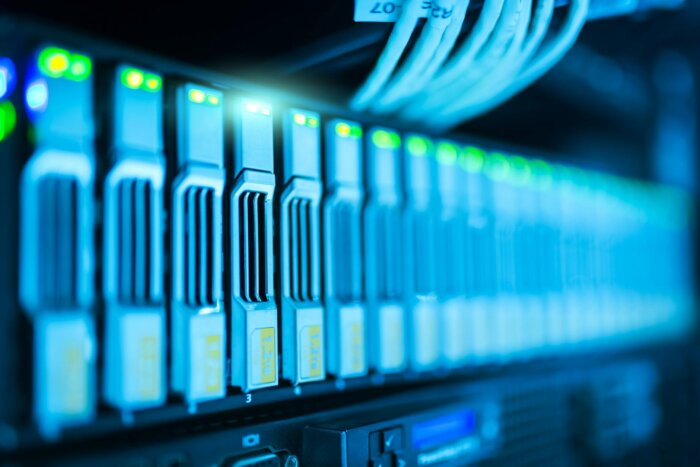
Header image source: Pexels / Panumas Nikhomkhai (px:1148820)
Translated from the German original using artificial intelligence. The German version is authoritative.


