

Apple Divides AI Inference: Device vs. Cloud
Apple separates on-device and cloud AI at WWDC 2026: 12 GB RAM as the edge gate, private cloud compute for peak loads. The lesson for DACH teams.
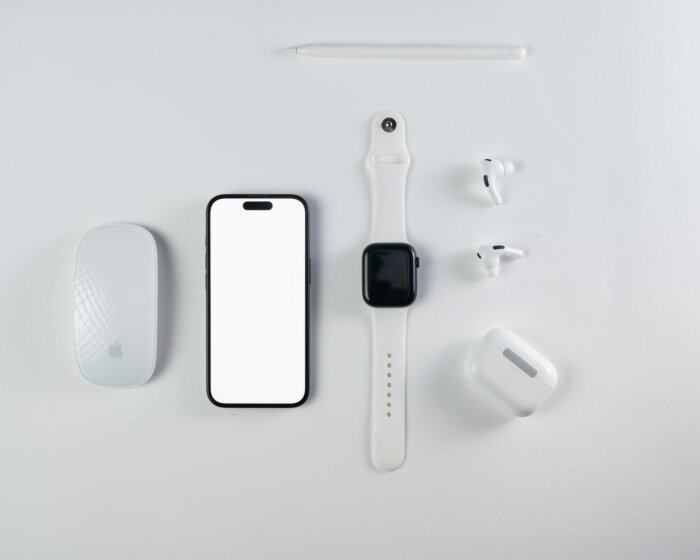
The most-discussed slide at WWDC 2026 was a plain list of devices. It had little to do with the new Siri. On June 8, Apple drew a sharp line: its most powerful language model runs only on devices with 12 gigabytes of RAM, while anything computationally intensive moves to its own server cloud. Anyone planning inference should study that division more closely than the assistant itself.
Key Takeaways
- RAM becomes the hard edge gate: The most advanced on-device model requires 12 GB of unified memory. Only the iPhone 17 Pro, 17 Pro Max, and the iPhone Air meet that bar – the standard iPhone 17 with 8 GB does not.
- Private Cloud Compute carries the heavy load: Demanding tasks run server-side via Apple’s own cloud models. Developers reach both tiers through a single Swift interface.
- The architecture is the real lesson: Siri AI is initially not launching in the EU. The pattern behind that decision remains the cleanest real-world example of hybrid inference currently on the market.
Related:AI Sovereignty Starts with Infrastructure / FinOps Sees Everything but Can’t Touch Anything
Two Models, One Interface
The hall in Cupertino ran its familiar playbook: new animations, a chattier Siri, a handful of photo tricks. More interesting was the rationale Apple offered alongside them. The new Siri and the revised Apple Intelligence are built on new Apple Foundation Models. These models run in two places simultaneously: locally on the device and on Apple’s servers via Private Cloud Compute.
For developers, the more compelling part is the layer above all of that. Both tiers – the on-device model and the server model – are exposed through a single Swift interface. An application calls the same interface and can use local and server-side models alike, without maintaining two separate integrations. Apple says it developed the architecture together with Google; some server-side Siri responses draw on Google’s Gemini.
What is hybrid AI inference? Inference is the moment a trained model answers a query. Hybrid means some requests run locally on the end device while the computationally intensive remainder runs on servers. A router decides per request which path is cheaper, faster, or more privacy-compliant.
That number is the real news for anyone planning inference on end devices. Memory is the bottleneck here, long before processing power runs short. A large language model must hold its weights in RAM or it simply won’t run. Apple draws the line at 12 GB and accepts the consequence that even its own iPhone 17, with 8 GB, is left out. For iPad, M4 or later with 12 GB is required; for Mac, M3 or later with the same memory floor.
Who Pays for Peak Load
The split has an economics to it. Standard load – the constant stream of small requests – is meant to run locally: free for Apple, fast for the user, with no data leaving the device. Peak load is where costs accumulate. The new photo tools make this plain. Spatial Reframing, which retroactively shifts a picture’s perspective, and the Extend tool, which fills in image edges, both run over Private Cloud Compute.
That’s precisely where the lever sits. Cloud inference at this scale costs real money per request, and Apple caps the heavy features with usage limits. Anyone who regularly needs more is pointed – based on impressions from the keynote – toward a higher iCloud tier. In Germany, entry-level plans start at €0.99 per month for 50 GB and €2.99 for 200 GB. The throttled cloud thus becomes a revenue line.
For practical planning, that’s the more honest lesson than any model benchmark. A hybrid architecture is, first and foremost, a cost decision. The split has little to do with model quality. The cheap, private layer absorbs the volume; the expensive layer is reserved for peak demand and deliberately rationed. In your own stack you build the same capacity controls – just without an iCloud subscription as the billing layer.
What DACH Teams Can Take from the Split
One thing upfront: Siri AI is not coming to the EU for now. Apple cites the Digital Markets Act and is rolling the feature out initially to English-language markets only, launching as a beta in autumn. For a German team, the finished feature is simply not available yet. The local Foundation Models API for developers is ready independently; the server-side component via Private Cloud Compute, however, depends on availability and per-market clearance.
Three points translate directly. First: memory is the edge gate. Anyone looking to shift inference to end devices or edge nodes should start by calculating available RAM per device class – compute is rarely the bottleneck. Second: a layer like Private Cloud Compute is primarily a privacy architecture. It allows heavy models to run without raw data sitting permanently in a third-party cloud, and that is exactly the sticking point in the DACH context. Third: the unified interface across both layers hides the complexity. The real craft lies in the routing logic – the piece that decides when to compute locally and when remotely – while the model itself is the simpler part.
Apple frames the split as convenience. For teams making their own on-device versus cloud decisions, it’s a blueprint with a price tag attached. The expensive layer gets rationed, the cheap one carries the load, and the whole apparatus hangs on a single interface that makes the call. You can replicate that long before the first German Siri response ever arrives.
Frequently Asked Questions
What sets on-device inference apart from cloud inference?
On-device inference runs the model locally on the end device. It’s fast, costs the provider nothing per request, and keeps data on the device. Cloud inference runs on servers, allows for significantly larger models, but incurs ongoing costs and sends data off the device.
Why does Apple specifically require 12 GB of RAM?
A capable language model must hold its weights entirely in memory. If RAM is insufficient, the model won’t run at all – or only in a heavily restricted form. 12 GB is the threshold at which Apple unlocks its most powerful local model, which is why the iPhone 17 with 8 GB is excluded.
What is Private Cloud Compute in this context?
Private Cloud Compute is Apple’s server layer for AI tasks too large to handle on-device. It’s built as a privacy architecture: data is processed for the computation but is not intended to be stored or analyzed permanently. It handles the peak load that cannot be managed locally.
Is the new Siri coming to the EU?
Not initially. Apple cites the Digital Markets Act and is rolling out Siri AI from autumn onward in English-speaking markets first. An EU launch date remains open. The underlying developer interface for the Foundation Models, however, is not affected by this restriction.
What can you take away from this for your own stack?
Three things: treat RAM as a hard limit for edge inference, plan a private cloud layer as a privacy building block for heavier models, and – most importantly – build the routing mechanism that decides per request whether to go local or remote. That last piece is the real lever for cost and privacy.
Cover image source: Pexels / Jakub Zerdzicki (px:32583519)
Translated from the German original using artificial intelligence. The German version is authoritative.


