

CloudFront 5xx: What VPC Origins Teams Need to Check
CloudFront-VPC-Origins reported 5xx errors for hours on July 16. What DACH teams should now check regarding failover, inventory, and Edge metrics.
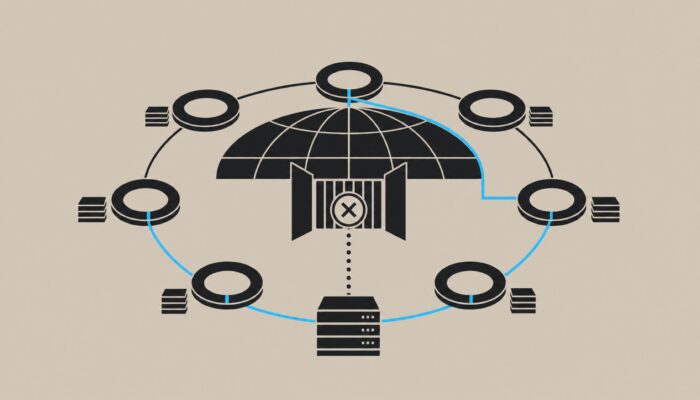
On 16 July 2026, CloudFront distributions with VPC origins delivered hours of 5xx errors. An internal fleet limit for private origins halted edge routing configuration – often while the ALB itself appeared healthy. If you place private origins behind CloudFront, implement failover before the next control-plane failure locks the global door.
Key Takeaways
- Window 07:45–11:18 UTC. Only VPC origins were affected; classic public origins and S3 origins continued running. AWS cited an internal connection-management limit as the trigger.
- Workaround required switching origin type. Without a pre-built staging distribution and tested IaC, the note on the status dashboard remains useless.
- Secondary-tier risk. Canvas, Blackboard, Hugging Face and identity providers also hung – even if your own app showed “green,” login and CDN could still display red 5xx.
Related:AWS Sovereign Cloud: what is really separated / The 200 milliseconds that drive users away from your SaaS
What actually flipped on 16 July
VPC origins connect CloudFront to Application Load Balancers, Network Load Balancers or EC2 instances inside private subnets. The edge is the only public entrance; the origin needs no public IP. It is precisely this private link segment that relies on an AWS-internal fleet distributing routing configuration to the network processors.
When an internal limit of that fleet was reached, the system stopped loading updated routing data correctly. Result: elevated 5xx for customers with VPC-origin connectivity. Other origin types stayed unaffected, according to AWS Health updates. The incident lasted from 07:45 to 11:18 UTC – more than three and a half hours of global friction at a single feature edge.
Why highly available setups still collapsed
Many teams adopted VPC origins precisely for security posture, shrinking the public attack surface while letting CloudFront act as the single entry point. That reduces exposure but concentrates the data path. When the connection-management layer for private origins fails, neither multi-AZ inside your own account nor a second region replica in the same pattern helps if the same global config path is in play.
AWS suggested switching the origin type – shifting from VPC origin to a publicly reachable origin configuration – as a workaround. That sounds simple, yet in practice it only works if the alternative already exists as a staging distribution or Terraform module and has been tested. Teams that open security groups and flip DNS during the incident burn the first 90 minutes.
Checklist for DACH Platform Teams
First: inventory. Which distributions use VPC Origins? Which business paths depend on them – login, API, media, partner portals? Without this list, every status-page alert is just noise.
Second: failover path. Keep a tested alternative ready: public origin behind strict prefix lists, a second CDN entry point, or a targeted origin-group failover. Continuous deployment in CloudFront (staging distribution) is ideal for dry-running the switch before the status page turns red.
Third: observability beyond the ALB. Separate 5xx at the edge and origin-latency metrics must trigger distinct alerts. If only the target-group-healthy host glows green, you’ll spot the control-plane failure too late.
# Find VPC Origins in the account list (AWS CLI)
aws cloudfront list-vpc-origins --query 'VpcOriginList[*].[Id,Arn,Status]' --output table
# List distributions with origin domains
aws cloudfront list-distributions \
--query "DistributionList.Items[*].{Id:Id,Origins:Origins.Items[*].DomainName}" \
--output json
Second Row: SaaS That Goes Down With You
Incident trackers reported impacts among identity providers, EdTech platforms like Canvas and Blackboard, and developer and AI tools. For mid-market companies, the uncomfortable lesson is this: even if your own distribution is clean, the IdP in front can still block the login. Dependency maps should therefore treat CDN and identity as first-class risks, not just the list of your own Kubernetes namespaces.
Region failover alone rarely saves you during global configuration incidents. Multi-cloud as an answer brings its own operational overhead and often hits the same SaaS dependencies. More realistic is usually: prepare known workarounds, automate status feeds, and keep communication templates for business impact ready.
What to Do This Week – Concrete Steps
Schedule a 60-minute exercise: simulate a “VPC Origins 5xx” status, open the workaround runbook, promote the staging distribution or apply the IaC plan, and measure the rollback. Document which security exceptions the public fallback needs and who can approve them. After that, the next incident won’t require an improvised security review at 3 a.m.
VPC Origins remain a strong security pattern. They’re only highly available if the loss of the private connection path is designed for – and rehearsed.
Frequently Asked Questions
What are CloudFront VPC Origins?
VPC Origins let CloudFront fetch content from private subnets – typically ALBs, NLBs, or EC2 instances without public exposure. CloudFront becomes the single public entry point; the connection to the origin runs over an AWS-managed private path.
Why didn’t multi-AZ inside my own account help?
The failure resided in the fleet that globally manages connections to private VPC Origins and distributes routing configuration. Local redundancy inside the account changes nothing if the limit sits in that connection-management path.
What workaround did AWS suggest?
During the incident, AWS recommended switching the origin type – from VPC Origin to another origin configuration. In practice this only works if you already have a prepared staging environment, IaC, and tested security rules.
Which metrics should I alert on?
Separate CloudFront 5xx error rate and origin-latency from target-group-health. Add synthetic checks from outside the region and alerts on the AWS Health feed for CloudFront operational issues.
Is a second CDN provider enough?
As part of a strategy, yes; as a silver bullet, no. Many SaaS dependencies still sit on the same hyperscaler. Prioritize failover for your critical entry paths and identity before you overhaul the entire multi-cloud architecture.
Editor’s Reading Picks
- AWS Sovereign Cloud: what’s really separated
- The 200 milliseconds that drive users away from your SaaS
- When AI agents travel: data residency as an operational headache
More from the MBF Media Network
MyBusinessFutureInvestment backlog: how AI uncovers hidden budgetsDigital ChiefsThe Data Act’s data claim already applies to existing fleetsSecurityTodayNIS2 patchwork: four member states before the ECJImage source: AI-generated (July 2026)


