

Google hands over Sovereign Cloud to Thales
cloudmagazin assesses Google’s sovereign cloud roadmap for Germany: Thales operations, key control, and three sovereignty tiers for architects.
Google Cloud is bringing a sovereign cloud to Germany by the end of 2026, with operations handled by an independent German company under Thales, legally separate from Google. The announcement from May 2026 is more than another sovereignty label. It shows how a US hyperscaler is trying to meet Europe’s control demands both technically and legally.
Key Takeaways
- Operations run by Thales, not Google: A legally and operationally separate German company under the French Thales group runs the platform, staffed from Germany.
- Key sovereignty at the core: Thales is set to hold the cryptographic keys for the German platform by the end of 2026. General availability is planned for the same period, with a preview currently running.
- Bosch sends a signal: With 120,000 Gemini licenses, a German industrial giant shows that sovereign models and enterprise AI can go hand in hand.
Related:German Hyperscaler: Who Has Substance / The Lock-in Is Wobbling
What Google Is Announcing for Germany
At the core of the announcement is an operating model. Google Cloud supplies the technology, while operations fall to a new German company that belongs to Thales and is legally and operationally separate from Google. The platform runs on dedicated infrastructure managed exclusively by staff based in Germany. By the end of 2026, the cryptographic keys are meant to sit with Thales, with general availability planned for the same period.
The offering is currently available as a preview. Bechtle is among the local sales partners on board. The target audience is the public sector and regulated industries, exactly the customers for whom data sovereignty is not optional.
Where This Model Sits on the Sovereignty Spectrum
Sovereignty in the cloud is a spectrum. At one end sits pure software control, where data stays in the EU but the operator remains under the hyperscaler’s authority. At the other end sits fully separate operation by a European partner with its own key sovereignty.
The Thales model moves closer to that sovereign end, because both operations and keys sit with an independent European company. For architects, the decisive question remains which legal framework applies in a crisis and who can actually refuse access when it matters. The new BSI C3A catalog makes exactly these questions systematically verifiable for the first time.
Why Thales Holds the Keys and Operations
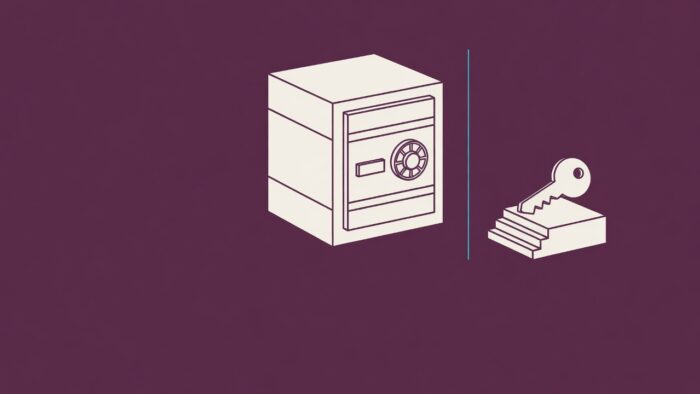
Key sovereignty is the pivot point. Whoever controls the cryptographic keys decides who accesses the data. By taking over these keys and operations, Thales creates a dividing line between Google’s technology and control in European hands.
Whether this separation holds up in a crisis depends on the details of governance and the legal framework of the operating company. The model is a serious attempt to meet the demands of sovereign customers without sacrificing the maturity of Google Cloud services. The real test still lies ahead with general availability.
Bosch’s 120,000 Gemini Licenses as a Signal
When a German industrial giant like Bosch acquires 120,000 licenses for Gemini Enterprise and builds its AI applications on Google Cloud, that’s more than a procurement decision. It signals that major enterprise users are willing to run enterprise AI from a US provider, as long as the sovereignty model holds up.
For the market, this is an important signal. Sovereignty and access to leading AI models are often treated as opposites. The Bosch case suggests the two can be reconciled through the right operating model. For other corporations with a similar profile, a reference customer like this lowers the barrier to entry.
What This Means for the Competition
The other hyperscalers face the same pressure. Anyone who takes the regulated German market seriously needs a credible sovereignty offering. A pure EU data center is increasingly not enough on its own. Partner-operated models with local key control are becoming the new minimum standard for sensitive workloads.
For European providers, this raises competitive pressure elsewhere. Their edge on sovereignty shrinks as US hyperscalers catch up through partners. Their argument shifts more toward complete independence from any non-EU corporation, a point that a partner-operated model, by definition, can’t fully deliver.
Frequently Asked Questions
What is the Google Sovereign Cloud?
The Google Sovereign Cloud is a sovereign cloud platform for Germany, planned for launch by the end of 2026. Google Cloud provides the technology. Operations are handled by a legally and operationally separate German company under the French Thales group, staffed from Germany with dedicated infrastructure.
Who exactly runs the platform?
A new German company, legally and operationally separate from Google, belonging to the French Thales group and staffed from Germany. The infrastructure is dedicated and managed exclusively from Germany.
Is this more sovereign than a standard EU data center?
Broadly, yes, because operations and key control sit with an independent European company. A hyperscaler’s plain EU data center still leaves the operator under the parent company. The precise classification depends on the governance details.
What does the Bosch deal mean for other companies?
Bosch is using 120,000 Gemini licenses to run enterprise AI on Google Cloud. As a reference customer, this lowers the barrier for corporations with a similar profile to combine sovereignty requirements with modern AI models.
Should I commit to this now?
There’s a strong case for evaluating it during the preview phase. For production use with sensitive workloads, it’s worth waiting for general availability and the sovereignty level that can be verified by then. The BSI C5 catalog provides the right framework for that assessment.
Editor's Picks
cloudmagazinGerman Hyperscaler: Who Really Has SubstancecloudmagazinAWS and Azure Under EU Oversight: The Lock-In Is WobblingcloudmagazinCritical Infrastructure Moving to the Cloud: What Secures the MigrationMore from the MBF Media Network
Digital ChiefsSovereign Cloud: When the Premium Actually Pays OffMyBusinessFutureGermany’s AI Oversight Now Has an AddressSecurityTodayPost-Quantum Becomes Mandatory in Cloud CertificationImage source: AI-generated (August 2026)
Translated from the German original using artificial intelligence. The German version is authoritative.


