

Cloudflare: The Line Between Bot and Human Is Obsolete
BotBase lists known bots, Precursor verifies the session continuously. Since August 31, Adaptive Intelligence learns on its own for Enterprise customers.
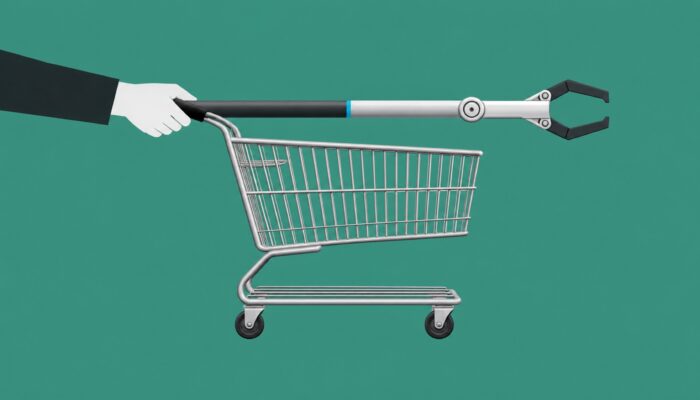
Cloudflare has declared the separation of bot and human obsolete. A visitor can browse a shop as a human, while an agent completes the purchase. Trust is evaluated across the entire session, and risk remains its own metric.
Key takeaways
- Hybrid sessions. Checking only the first request is no longer enough once an agent takes over mid-session.
- BotBase stamps known bots. Verified means: honest self-reporting and no abuse of access. The directory also lists bots without this seal.
- Precursor evaluates behavior. In 24 hours, roughly 206 million assessments across about 73,000 zones. Adaptive Intelligence has been enabled for Enterprise customers since August 31, 2026, with new Labyrinth modes expected to follow around the end of the year.
Related:Cloudflare Containers: When Workers aren’t enough
What is BotBase? Cloudflare’s directory of known bots and agents. It records origin, purpose, and behavior – including clients that don’t carry the Verified seal. In the product docs, BotBase sits under Bot Management and is listed as Enterprise.
Mid-Session, the Agent Takes Over
Writing on August 7, 2026 on the Cloudflare blog, Jin-Hee Lee describes a scene many shops already know: someone browses and fills their cart, and later an agent handles the checkout. The session stays the same – only the actor changes. Anyone who checks only the first request stamps the human and lets the agent ride along.
It’s precisely this hybrid session that renders the old binary logic useless. A bot can be useful, and a human can abuse trust. Both can happen in the same session, one after the other. Cloudflare draws a hard conclusion from this: risk and trust are independent values. A high trust score says nothing about whether the next step is risky. A risk score at the gate says nothing about whether the trail still looks human afterward.
For operators, this means one thing in practice: allowlists based on User-Agent and IP ranges lose their punch as soon as a verified client hands the task off to another actor. The question shifts from “Is this a bot?” to “Does this visitor behave the way the stamp promises?”
BotBase also knows uninvited guests
BotBase answers the question of origin. About behavior during the session, the stamp says nothing. BotBase catalogs everyone Cloudflare knows, including the less polite ones. The “Verified” seal comes with two conditions: the client honestly identifies itself and doesn’t abuse the trust it has gained.
Honest, according to the docs from July 1, 2026, means: a cryptographic Web Bot Auth signature, a published IP list with a stable user agent, or reverse DNS. Abuse means: ignoring robots.txt, blasting through rate limits, circumventing requirements. According to the docs, BotBase distinguishes direct access (one operator) from intermediary access (many end users behind the same agent service). A shopping agent that any user can trigger therefore carries a different label than your own uptime checker.
The taxonomy goes further than block or allow. Search, Agent, and Training are the classes that Cloudflare has made separately controllable for all customers since July 1, 2026, even without Bot Management Enterprise. Alongside them sit Transact for checkout on someone’s behalf, Data Collection, Security Testing, SEO, Ads Verification, Social and Link Preview, Feed Fetching, and Monitoring. An agent that buys gets a different class than a crawler that trains.
The limitation is in the contract: the directory itself is publicly viewable via Cloudflare Radar. Anyone who wants to use the classification in their own firewall rules needs Bot Management at the Enterprise tier.
Precursor checks mid-session
Precursor closes the gap behind the stamp. Once a customer switches it on, the system injects JavaScript via the CDN. It continuously evaluates whether the interaction looks human. Cursor movement, timing, the path through the page: signals a headless browser can fake individually. Over minutes, it rarely keeps all of them clean.
Cloudflare introduced Precursor on July 13, 2026, as part of Enterprise Bot Management. It remains free until general availability later in the year. The August blog post cites the first measurement from the network.
Suspicious behavior often only shows up mid-session. With Precursor Trace, Cloudflare offers a public demo: your own mouse movements get rated as human or bot. The trajectory reveals the switch more clearly than the first header ever could.
Adaptive Intelligence is live since late August
The third stage is called Adaptive Intelligence: a model that retrains itself and replaces the detection models rolled out in versions to date. It was announced on 7 August, and on 31 August 2026 Cloudflare switched it on: Enterprise customers activate the “Auto Update Machine Learning” toggle in the Bot Management dashboard. This releases the first of three components, the continuous retraining of the model. Automatically generated disposable rules and learning from the entire network traffic are set to follow. Toward the end of the year, Cloudflare has announced additional countermeasures, including randomized actions, extensions of AI Labyrinth in the Maze, Summary and Poison modes, and queuing for bots identified as benign.
AI Labyrinth itself is already here. The documentation dated 3 August 2026 describes invisible nofollow honeypot links that send unpermitted crawlers down a dead end. Maze, Summary and Poison are the announced extension of this decoy, rather than today’s toggle in the dashboard.
With this, Cloudflare is making the decision about who is trustworthy. BotBase classifies, Precursor verifies, and since late August Adaptive Intelligence has been drawing the verdict on its own. Operators who maintain their own allowlist will henceforth be reading Cloudflare’s verdict. Anyone who switches on Precursor lets third-party JavaScript into every session. Anyone who identifies themselves honestly appears in the directory with origin and purpose. Yet the seal of approval comes from Cloudflare alone.
Frequently Asked Questions
What is BotBase?
BotBase is Cloudflare’s directory of known bots and agents. It lists origin, purpose and behavior, including clients without the Verified badge. In the product docs, it sits under Bot Management (Enterprise).
What does Verified mean at Cloudflare?
Two conditions: the bot or agent honestly identifies itself, and it does not abuse the trust it has gained. The docs cite a signature, an IP list, or reverse DNS, plus compliance with robots.txt and crawl rules.
What does Precursor check in a session?
Precursor continuously evaluates client-side signals such as cursor movement and the path taken through the site. Cloudflare injects the JavaScript via the CDN as soon as a customer enables the system.
Is Adaptive Intelligence already available?
Yes, since 31 August 2026 for Enterprise customers with Bot Management. The first component, continuous retraining of the model, is active. The extended Labyrinth modes Maze, Summary and Poison are expected closer to the end of the year.
What does AI Labyrinth already do today?
It deploys invisible nofollow links as a honeypot against crawlers that ignore the rules. Search engines that respect no-crawl directives leave the bait untouched. The new modes have been announced but are not the current default.
More from the MBF Media Network
MyBusinessFutureCloudflare 402: Your next customer is an AI agentDigital ChiefsOpenAI cuts token prices, agents gobble up the savingsSecurityTodayExploitGym: OpenAI agents built themselves a secret channelImage source: AI-generated (August 2026)
Translated from the German original using artificial intelligence. The German version is authoritative.


