

App Development in 2026: How Custom Applications Evolve into AI Layers
Standard software reflects what companies have in common. Individual apps reflect what sets the middle market apart.
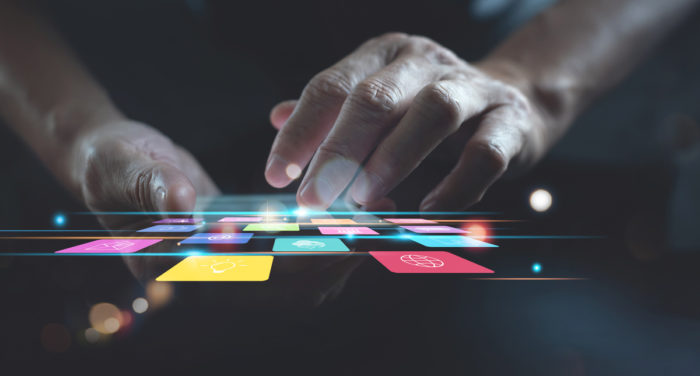
Standard software captures what many companies have in common. Custom apps, on the other hand, highlight what truly sets small and medium-sized businesses apart: processes that have evolved over time, billing logic that doesn’t appear in any textbook, warehouse and service routes that have been running for decades. By 2026, a new layer will be added on top-AI capabilities that only function properly when the underlying app architecture is optimized.
Key Takeaways
- Hybrid apps built on Blazor, .NET, and Microsoft 365 can deliver web, desktop, and mobile experiences from a single codebase, keeping maintenance costs low.
- AI features like Copilot integrations, embeddings, or agent workflows require a clean data layer within the app-not just an additional chat window.
- Custom development pays off when processes are too specific for standard software while still contributing to the company’s core value.
- DEVWARE has been working with .NET since 2004, is a Microsoft Certified Partner, and develops enterprise apps for Android, iOS, and the web, focusing on Blazor, Angular, and Xamarin.
Why Standard Solutions Will Reach Their Limitations Faster by 2026
Three developments are increasing pressure on standard software. First, supply chains and compliance requirements are becoming more granular, making it increasingly difficult for generic ERP or CRM modules to fully capture these nuances. Second, employees expect interfaces that align with their individual roles, rather than adhering to standardized industry standards. Third, AI models rely on structured and contextually relevant data-precisely where standard solutions often offer only fields but lack business logic.
Custom apps fill this gap. They model processes as they actually operate and provide data in a way that allows later AI layers to integrate seamlessly. The competitive advantage doesn’t lie in the app itself, but in the precision with which corporate processes are digitally represented.
Blazor and .NET as the Foundation for Hybrid Apps
Blazor is Microsoft’s ASP.NET Core technology, allowing web apps to be built in C# instead of JavaScript. With Blazor United, the separation between server rendering and WebAssembly was unified in 2023, significantly simplifying development. Apps can operate offline, render with high performance, and are compiled using the same codebase for both desktop and mobile platforms (via .NET MAUI Blazor Hybrid).
For companies operating in a Microsoft 365 ecosystem, this is the natural choice. Identities come from Entra ID, data resides in Dataverse or SharePoint, and AI functions are powered by Copilot Studio or Azure OpenAI. A custom Blazor app connects directly to these core components, without creating a separate parallel world.
DEVWARE has been developing applications using this stack since 2004. Our core expertise lies in the custom development of HTML5, Angular, Xamarin, and Blazor applications, tailored for Android, iOS, and the web. Our team always consists of architects and developers who view responsive design and UX quality not as add-ons, but as integral parts of the architecture.
AI Features as an Add-On to the Custom App
When discussing app development in 2026, the conversation inevitably turns to AI features seamlessly integrated into workflows. These range from Copilot integrations that suggest and summarize inputs, to embeddings that make unstructured documents searchable, and even agents capable of autonomously handling routine tasks. For this to work effectively, the app must provide the right data sources, permissions, and audit trails-something a standard solution rarely delivers, but a well-architected custom app can easily achieve.
The practical benefit? AI doesn’t replace the application-it enhances efficiency by reducing the time required for each task. Completing a scheduling process in 45 seconds instead of four minutes isn’t due to the AI feature itself, but rather to the app architecture that allows AI to integrate cleanly and efficiently.
Web Shops, Employee Portals, Specialized Tools
Three key areas where custom apps are particularly prevalent among mid-sized businesses have emerged.
Web Shops and Portals are essential when sales operations rely on proprietary configurators, customer-specific price lists, or multi-tiered approval processes. Standard e-commerce platforms seldom cover these needs without extensive customization.
Employee Portals serve as interactive frontends for workforce scheduling, knowledge management, and cross-departmental communication, featuring privacy-compliant access controls and mobile-friendly browser-based editing capabilities.
Specialized Tools cater to measurement and control processes, financial workflows, or information databases that simply don’t fit neatly into off-the-shelf industry packages. Here, every tailored function matters, while unnecessary features are deliberately omitted.
Frequently Asked Questions
When is custom development more advantageous than using a ready-made product?
Whenever the process contributes significantly to the company’s core value proposition and cannot be smoothly adapted to a standard solution without substantial friction. A general rule of thumb: if more than 30% of a standard product would need modification, custom development typically offers better economic value.
How fast is Blazor today compared to traditional JavaScript frameworks?
Blazor supports both server-side rendering and WebAssembly, and since .NET 8 it has grown considerably closer to frameworks like Angular or React. For Microsoft-centric tech stacks, Blazor emerges as the more resource-efficient choice in 2026, leveraging C# expertise across multiple layers.
How does AI integrate into a custom app without turning it into a silo?
Through well-defined interfaces with Microsoft 365, Azure OpenAI, or proprietary models, combined with clear data classification and robust audit logging. The app provides context, the model generates responses, with responsibilities clearly delineated yet shared collaboratively.
How long does typical custom development take in mid-sized companies?
The first productive release usually occurs within three to six months, depending on scope. More important than the overall timeline is the iterative approach: an initial release after eight to ten weeks, followed by planned enhancements.
Editor's Picks
cloudmagazinClaude Code, GitHub Copilot, and Cursor Compared in 2026cloudmagazinWhen Your Own Workforce Feeds ChatGPT with Customer DatacloudmagazinMulti-Cluster Kubernetes Without Ops Silos in 2026Advertisement
Image source: Adobe Stock / tippapatt


