

The Modern Data Center – Control Center in a Hyper-Connected World
Many cloud providers advertise with the term "data sovereignty". However, what is claimed is not always what you get.
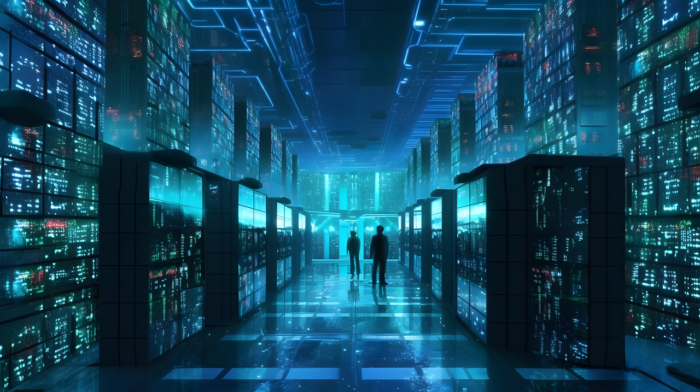
Data centers today are more than just server rooms–they are the hub for cloud computing, augmented and virtual reality, and the Internet of Things. Leading enterprises worldwide rely on systems for Hybrid Digital Infrastructure Management to manage complexity, serving up to 500 customers. Yet traditional DCM solutions reach their limits when mapping connectivity between people and devices.
Key Takeaways
- The modern data center acts as the central hub for cloud computing, the Internet of Things, and augmented reality, connecting people and devices globally.
- Traditional DCM solutions often provide limited visibility into assets and dependencies, especially regarding connectivity and virtual systems.
- HDIM solutions deliver a 360-degree view of devices and infrastructures–from cabling to software and virtualization.
- The White Space and Grey Space must be considered together to prevent connectivity disruptions and the resulting financial losses and reputational damage.
- Data center operators need integrated Hybrid Digital Infrastructure Management systems to secure perimeters, power supply, and service availability.
Traditional DCM Solutions – Not Always the Best Choice
Traditional DCM solutions (Data Center Management) focus on documenting physical components: racks, server locations, and space utilization in the White Space. They originated at a time when data centers were clearly defined, isolated units. Today, in an era of hybrid infrastructures and cloud computing workloads, these systems are no longer sufficient. The main reason: they fail to capture relationships between physical and virtual components. Decision-makers may see where a server is located, but not which applications are running on it or which UPS system powers it.
An example highlights this weakness: a switch in the Grey Space fails. Without an integrated view of power distribution and monitoring, it remains unclear which servers in the White Space are affected. This makes it impossible to predict whether cloud computing workloads or critical augmented and virtual reality applications will go offline. This is precisely where traditional DCM fails–it separates facility data from IT data, even though both are inextricably linked.
Network and data center managers need a solution that captures both the physical and logical layers. Only then can service availability be ensured in the long term. The central requirement is transparency across all operational zones–from the perimeter to software and virtualization. Without understanding the relationships between components and systems, proactive measures are impossible. The risk increases that connectivity disruptions lead to financial losses and reputational damage.
Data center management must today reflect the entire value chain–from power supply to the end user. This also includes meet-me rooms, which serve as connectivity hubs linking the data center’s internal network with external providers. Without seamless documentation, organizations risk global outages. This gap is particularly critical for more than 40 percent of DACH-region companies already operating hybrid infrastructures.
Powerful Reporting and Analytics Capabilities in the Data Center
A modern data center generates massive amounts of data every day–from temperature readings in the Grey Space to bandwidth utilization in the White Space. But raw data alone isn’t helpful. Real value emerges only when this information is contextualized and translated into actionable insights. This requires powerful reporting and analytics capabilities that go far beyond basic statistics.
HDIM solutions enable exactly this kind of contextualization. Instead of isolated metrics, the system shows how optimizing power supply affects cooling performance, or how modified cabling impacts latency in cloud computing applications. Such analyses are essential for well-informed decisions–such as capacity expansions or migrations within multi-cloud environments.
A concrete example: An operator wants to optimize space utilization in the White Space. With traditional DCM tools, they can see how many racks are occupied. With HDIM, they also see which servers host critical workloads for augmented and virtual reality, which ones have redundancy, and which are connected to which UPS systems in the Grey Space. This depth of analysis prevents accidental disruption of critical services during reconfigurations.
IT infrastructure management must not be based on silos. Integrating third-party tools–such as network monitoring or security solutions–is therefore essential. HDIM platforms offer open APIs to ingest data from SNMP, CMDB, or cloud management tools. This creates a unified view across the entire infrastructure–both physical and virtual. This approach reduces the risk of human error and simultaneously accelerates incident response times.
HDIM Solutions Provide Comprehensive Visibility Across IT Infrastructure
Hybrid Digital Infrastructure Management (HDIM) systems take a crucial step beyond traditional DCM solutions. They integrate facility and IT data within a single platform. The result is a digital twin of the entire data center–from transfer switches and circuit breaker panels to virtual machines in the cloud. Mapping connectivity between people and devices is key to understanding complex dependencies.
This 360-degree view enables not only accurate representation of the current state but also prediction of change impacts. When a new switch is installed in the White Space, the HDIM system can show which cable routes are affected, whether power supply is sufficient, and whether a redundant path in the network topology will be lost. Such simulations prevent planned actions from causing unexpected outages.
The FNT Command Platform, used by over 500 companies worldwide, exemplifies such an HDIM solution. It captures all assets and dependencies–from physical cabling to software and virtualization. The Grey Space is also fully mapped: including pumps, valves, batteries, and UPS systems. The platform thus supports all operational zones within the data center and ensures complete transparency of component relationships.
Hybrid cloud environments benefit particularly from HDIM. Here, on-premises data centers, edge infrastructures, and public clouds must be managed consistently. Without an integrated system, chaos looms–HDIM turns complexity into control. Organizations adopting Hybrid Digital Infrastructure Management are therefore investing in an architecture that equally promotes scalability, security, and efficiency.
The Four Activity Zones in Focus: From Perimeter to Meet-me-Room
A data center can be divided into four core activity zones–each with its own connectivity logic. Only by considering all four zones together can service availability be ensured. The first zone is the Perimeter and Supply. This involves the physical security of components: access controls, fire detection systems, and power connections. This zone forms the foundation for everything else. Without transparency here, stable operations cannot be guaranteed.
Next comes the Grey Space, the second zone. It includes technical equipment such as cooling systems, UPS units, transfer switches, and distribution panels. Connectivity here focuses on power distribution and monitoring. Failures in this zone directly impact IT systems–often with a delay, but with serious consequences. Mapping the connectivity between these components is therefore essential to detect outages early.
The White Space is the IT area: servers, switches, storage. This zone features the densest connectivity–both physically via cables and logically through networks. Optimizing power supply and space utilization is especially critical here, as bottlenecks quickly lead to performance degradation. At the same time, workloads for the Internet of Things and Augmented Reality run in this space, whose availability directly depends on the condition of the other zones.
The fourth zone is the Meet-me-Room. This area serves as the central connectivity hub, linking the data center’s internal network with external providers, customers, or cloud partners. Disruptions here have immediate global effects and can cause worldwide outages. Cabling and space utilization in the meet-me-room must therefore be meticulously planned and documented. Together, the activity zones–Perimeter, Grey Space, White Space, and Meet-me-Room–form an ecosystem that functions stably only when all parts are transparent and interconnected.
Conclusion: From Fragmentation to Integration
The days of data centers operating as isolated server rooms are over. Today, they serve as hubs for cloud computing, IoT, and augmented reality–and thus represent critical business infrastructure. Yet complexity is rising: more than 40 percent of DACH-region companies operate hybrid infrastructures that traditional DCM solutions can no longer adequately represent.
The answer is HDIM: integrated systems for Hybrid Digital Infrastructure Management that map all assets and dependencies–both physical and virtual–within a digital twin. Only this approach ensures service availability, advances energy supply optimization, and prevents connectivity disruptions.
Data center operators now face a choice: continue working with fragmented tools, or adopt a platform that jointly represents the Perimeter, Supply, Grey Space, White Space, and Meet-me-Room. This decision directly impacts competitiveness: those who don’t fully understand their infrastructure cannot operate it efficiently–and risk financial and reputational damage with every outage. Enterprises and public agencies already using the FNT Command Platform demonstrate that integration is achievable–and that it pays off.
Frequently Asked Questions
What is the difference between DCM and HDIM?
DCM (Data Center Management) traditionally focuses on managing physical resources such as racks, servers, and space utilization. HDIM (Hybrid Digital Infrastructure Management) extends this by also mapping virtual systems, networks, and dependencies. HDIM provides a 360-degree view across all activity zones–from power supply to software and virtualization–and integrates facility and IT data within a single system.
Why are traditional DCM solutions no longer sufficient?
Traditional DCM solutions


