

Semiconductor market: Germany’s role in the chip chain
Contrary to the general mood, Germany is ahead in many areas, which surprisingly also includes the semiconductor market.
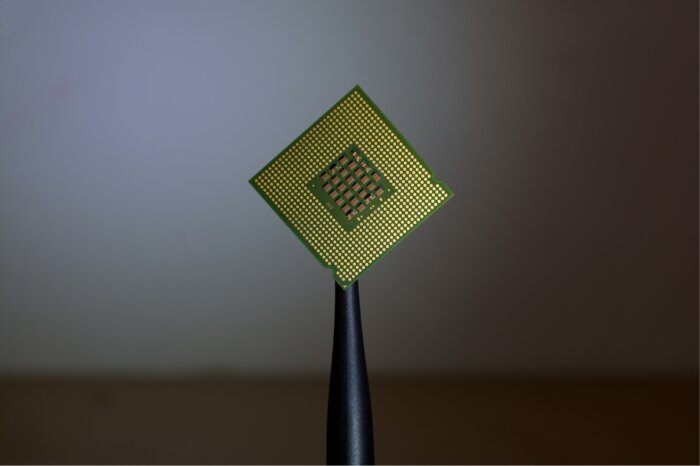
Germany is often portrayed as a laggard. However, the Federal Republic is a front-runner in key areas of the semiconductor market, as a study presented in February 2025 shows.
Key Points in Brief
- Germany is stronger than often assumed in power semiconductors, optical chips, and sensor technology.
- The USA, Japan, and Germany lead in semiconductors for high electrical currents and voltages.
- Asia dominates over 50% of the global chip market, primarily China and Taiwan.
- Germany exports more semiconductor equipment than it imports, including manufacturing machines.
- Germany, the USA, Japan, and the Netherlands are major suppliers of chip production machinery.
Amidst the generally gloomy sentiment and the feeling of being left behind internationally, there is some positive news for Germany. A study presented at the Munich Security Conference in February 2025 by the Ifo Institute and Econpol Europe shows that Germany is stronger than widely believed in certain key areas of the semiconductor industry.
According to Industry of Things, this particularly applies to power semiconductors, optical chips, and sensor technology. The data collected in the study from the nine most important producing countries show that Taiwan and China lead in the export of integrated circuits. This category includes numerous electronic components integrated into a chip or microprocessor, such as transistors, diodes, resistors, and capacitors.
Leading in Specialised Areas
The areas in which Germany, the USA, and Japan excel include semiconductors and components designed to control and switch high electrical currents and voltages. The same applies to optical chips, as required for fiber optic networks, for example.
While Asian countries such as South Korea, Taiwan, Singapore, Malaysia, and China dominate over 50 percent of the global chip market, Germany, Japan, the USA, and the Netherlands contribute a significant portion of the equipment and machinery for semiconductor manufacturing.
When including the machines for processing raw materials, Germany exports more than it imports in the semiconductor market, according to the Ifo study. This means that dependencies in global semiconductor production are by no means one-sided, as the study’s authors note.
Frequently Asked Questions
In which semiconductor areas is Germany particularly strong?
Germany is particularly strong in power semiconductors, optical chips, and sensor technology. These areas are classified as top-tier in the Ifo study.
Which countries dominate the global chip market?
South Korea, Taiwan, Singapore, Malaysia, and China together dominate over 50 percent of the global chip market. They lead in the export of integrated circuits.
What does the study show about Germany’s trade balance in the semiconductor sector?
Germany exports more semiconductor equipment, including manufacturing machines, than it imports. This also applies when considering raw material processing.
What role do Germany and other Western countries play in chip production?
Germany, the USA, Japan, and the Netherlands supply a significant portion of the production machinery. They are crucial for global semiconductor manufacturing.
Where was the Ifo study presented and who created it?
The study was presented in February 2025 at the Munich Security Conference. It was created by the Ifo Institute in cooperation with Econpol Europe.
Reading Tips from the Editorial Team
- API-First: Why Modern Cloud Architectures Succeed or Fail Based on API Design
- Pretext: Can a JavaScript Library Solve the 30-Year Browser Problem – Or Is It Just Hype?
- AWS vs. Azure vs. Google Cloud 2026: The Honest Comparison for DACH Companies
More from the MBF Media Network
SecurityToday | MyBusinessFuture | Digital Chiefs
Header Image Source: Unsplash / Brian Kostiuk


