

Reboot Germany Cloud 2026: Funding and Digital Hubs Guide…
Funding programmes, digital centres and sovereignty criteria will shape the 2026 cloud‑provider shortlist for SMEs. Why STACKIT, Delos and SAP Sovereign Cloud are now becoming realistic.
7 min. read
As of: 22.04.2026
Anyone planning a cloud project in Germany’s Mittelstand in 2026 isn’t just negotiating with AWS, Azure and Google. The Federal Ministry for Economic Affairs, the state governments and the new Mittelstand-Digital centres are sitting invisibly at the table. Funding programmes, data protection criteria and requirements to use German or European providers are measurably reshaping shortlists – typically in favour of STACKIT, Delos Cloud, IONOS and SAP Sovereign Cloud.
Key Takeaways
- The BMWE funding call for Mittelstand-Digital centres closes for thematic and sector centres on 30 April 2026. The next network generation launches in 2027, with focus projects following in 2028.
- Hamburg’s Digital Check covers up to 50 percent of digitalisation costs with a maximum of 7,500 euros; applications are open throughout 2026.
- Bavaria’s Digitalbonus Plus awards up to 30,000 euros for projects with a high level of innovation – closely tied to data protection and digital sovereignty criteria.
- STACKIT and Delos Cloud are making it onto shortlists significantly more often in funded projects. The Delos Cloud productive phase is set to launch during 2026.
What is the Reboot Germany cloud logic? Reboot Germany refers to the modernisation package announced by the German federal government in autumn 2025, backed by a 735 billion euro special fund. A portion of that flows through funding programmes into the digitalisation of the Mittelstand. Many of these programmes are tied to data protection, sovereignty or location criteria that favour specific cloud providers. The net result is an environment where mid-sized companies pursuing funded cloud projects typically end up with a different shortlist than they would in an unfunded context.
RelatedAWS EC2 C8in and C8ib / Mittelstand-Digital-Zentren Restructuring
The Funding Landscape 2026: Three Realistic Paths
Funding for cloud projects in the German SME sector is structured across three levels in 2026. At the federal level, the Mittelstand-Digital-Zentren (Digital SME Centres) operate in an advisory capacity – they do not finance projects directly, but accompany implementations and identify funding routes. The call for proposals for the successor network closes for thematic and sector-specific centres on 30 April 2026; the new generation launches in 2027 with a focus on micro-enterprises and cybersecurity. Anyone with an active project today should lock in advisory support by the end of 2026 – onboarding in the new generation will likely take three to five months.
At the state level, the various Digitalbonus programmes are up and running. The Hamburg Digital Check is the go-to option for smaller projects: up to 50 percent grant funding, capped at 7,500 Euro, with applications open throughout 2026. For mid-sized companies with annual revenues up to 50 million Euro, the programme works as a gateway for cloud migration, digital workplace rollouts, or IT security upgrades. Processing takes eight to twelve weeks, with disbursement after project completion – making cash-flow planning critical.
Bayern Digitalbonus Plus is the larger-scale option: up to 30,000 Euro for projects with a distinctive innovation component. The criteria are tighter – an advisory board evaluates whether the initiative goes beyond standard digitalisation. AI-driven processes, sovereign cloud architectures, and cybersecurity requirements under NIS-2 or CER are regularly approved in practice. Conventional ERP migrations without an additional innovation angle typically fall through the cracks.
Which providers meet the funding criteria
STACKIT is the most visible German provider. According to its own figures, the Schwarz Group is investing around 11 billion euros in expansion, its data centres are located in Germany, and its certification structure is built on BSI C5 and ISO 27001. For funding programmes with a sovereignty requirement, STACKIT is a default choice. The platform covers standard IaaS, managed databases, Kubernetes and now object storage as well – for typical mid-market workloads the portfolio is sufficient, though gaps remain compared to AWS or Azure for highly specialised PaaS scenarios.
Delos Cloud enters full production operation during 2026. It is a joint venture combining Microsoft technology, SAP’s business model and Arvato operations under German law. For public authorities and regulated industries, Delos is the obvious answer to the question of how to use Microsoft 365 functionality without accepting US access. For funded SME projects with strict data protection requirements – particularly in healthcare, education and social services – Delos will become the third standard option alongside STACKIT and SAP Sovereign Cloud in 2026 and 2027.
SAP Sovereign Cloud is growing in parallel: SAP announced an investment volume of around 20 billion euros in 2024, which is being rolled out into the production layer throughout 2025 and 2026. For companies already running SAP and migrating to S/4HANA in 2026 or 2027, the sovereignty variant is an option that funding bodies accept without requiring additional justification. IONOS, plusserver and q.beyond round out the list with SME-focused alternatives that have a lower barrier to entry.
How funding actually reshapes the provider shortlist
In non-funded cloud projects, AWS, Azure and Google Cloud appear on 80 to 90 percent of shortlists. In funded projects with a sovereignty requirement, the picture shifts considerably. Funding board reviewers check whether data processing takes place exclusively under EU or German law, whether the concept addresses vendor lock-in risks and whether the provider setup can continue to operate after the project ends. Anyone trying to answer those three questions with a US-hyperscaler-only approach will generally lose points.
The pragmatic reality of 2026 is a hybrid shortlist. Core systems with STACKIT, Delos or SAP Sovereign Cloud; specialist components such as AI inference or globally distributed services supplemented by Azure or AWS, with explicit justification and documented data protection safeguards. This combination is fundable and technically viable – but it is more demanding to operate than a single-provider architecture. Mid-sized IT organisations with fewer than five cloud engineers in particular should not underestimate that when planning.
A third observation concerns the timeline. A funding application requires three to six months of lead time before approval. Anyone planning a project in 2026 that should go live by end of 2027 needs to submit the application by summer 2026 at the latest. The Mittelstand-Digital-Zentren funding call with a deadline of 30 April 2026 closes just one door – many others are open year-round, but with varying processing times. Fail to plan the calendar properly and the project will be finished before the approval arrives.
The 2026 Calendar for Cloud Funding
What Companies Should Be Doing Right Now
The pragmatic sequence for a funding-compatible cloud project plan does not start with provider selection – it starts with the funding landscape. Step one is a conversation with the relevant Mittelstand-Digital centre or regional Chamber of Commerce: which programmes fit the project, which deadlines are currently open, which outline should be submitted first. Step two is an architecture sketch with a clear separation between components that must be operated under sovereign conditions and supplementary services. Step three is a three-year cost calculation with and without funding – the right provider choice often shifts considerably once subsidy levels are factored in.
From an editorial perspective, a clear pattern has emerged over the past twelve months. Companies that treat cloud architecture as a purely technical decision routinely miss funding potential in the six-figure range. Companies that start with the funding logic automatically build an architecture that is more robust from a regulatory standpoint and remains politically adaptable. This is not an argument against US hyperscalers – it is an argument for a decision sequence in which funding and sovereignty are considered early in the process, not bolted on as an afterthought.
One final point concerns documentation. Every funding application ultimately produces a project document that serves as a reference for three to five years. Anyone who structures the application cleanly – architecture, data protection, operating model, costs, roles – simultaneously lays the groundwork for the first audit after project completion and for internal communication with management and works councils. Mid-sized companies that capture this as a by-product save operationally far more time than the application itself demands.
The Blind Spot: Operating Model After the Funding Phase
Most funding applications focus on the project phase: the architecture, the runtime, the milestones. What rarely gets thought through properly is the operating model that follows. Organisations that build their cloud environment over 18 months with grant funding and then run it from month 19 onward without subsidies often face a hard cost landing. The month-19 shock is a well-known term in economic development circles – and the primary reason why formerly subsidised projects end up being scaled back.
The countermeasure is less about IT than about contracts. Providers such as STACKIT and IONOS increasingly offer funding-compatible contract structures – monthly scaling instead of annual flat rates, throttling during low-usage periods, flexible resource terms. Organisations that renegotiate their operating model three months before funding expires typically end up with 25 to 35 percent lower ongoing costs than those that let contracts renew automatically.
The second component is internal skill coverage. Funding often covers external expertise – system integrators, security auditors, cloud architects. Once funding ends, those competencies need to exist in-house or be replaced by managed services. Mid-sized companies that ignore this continue paying external day rates without the grant coverage to offset them. The pragmatic fix: include skill development and knowledge transfer as an explicit project deliverable in the funding application, rather than financing it retrospectively out of the regular budget.
Third: the review cadence. Every funded cloud landscape benefits from an external review every 18 months, at a minimum covering architecture and cost. State-level funding programmes and KfW frequently offer subsidies for these reviews – smaller than the original grant, but strategically important because they surface operational drift early and allow for corrections. Taken together, this review cadence often has more bearing on long-term project success than the initial provider selection, and forms the real bridge from grant funding to a cloud operation that is sustainably viable and economically plannable over the long term.
Frequently Asked Questions
Which funding programmes are relevant in 2026 for cloud projects in the SME sector?
At federal level: the advisory Mittelstand-Digital centres (running until end of 2026, new round from 2027) and complementary funding calls from the Reboot Germany resources. At state level, the main options are digital bonus programmes: Hamburg Digital Check (up to 7,500 euros), Bavaria Digitalbonus Plus (up to 30,000 euros), and comparable schemes in North Rhine-Westphalia, Berlin and Saxony.
Can I use AWS or Azure in funded projects?
In most funding programmes, yes – but with additional justification covering data protection, exit scenarios and third-country transfers. For programmes with an explicit sovereignty requirement, purely US-based architectures are generally not eligible. The pragmatic answer is a hybrid architecture with a sovereign core supplemented by additional services.
What is the difference between STACKIT and Delos Cloud?
STACKIT is an independent cloud provider within the Schwarz Group with its own technology stack, focused primarily on IaaS and managed services. Delos Cloud is a joint venture that operates Microsoft technology under German law through Arvato – offering the visibility and functionality of the Microsoft stack, but structurally separate from the US parent company.
How long does it take from application to approval for a funding grant?
Depending on the programme, anywhere between eight weeks (smaller digital bonus schemes) and six months (two-stage processes involving an outline proposal and a full application). Payment is often made only after project completion – SMEs should plan their liquidity accordingly.
Is consulting from a Mittelstand-Digital centre free of charge?
Yes. Workshops, pilot projects and implementation support from the centres are generally free for small and medium-sized enterprises. Funding comes via the BMWE (Federal Ministry for Economic Affairs) grant call. Not covered are licence costs for the products used or custom software development beyond the pilot phase.
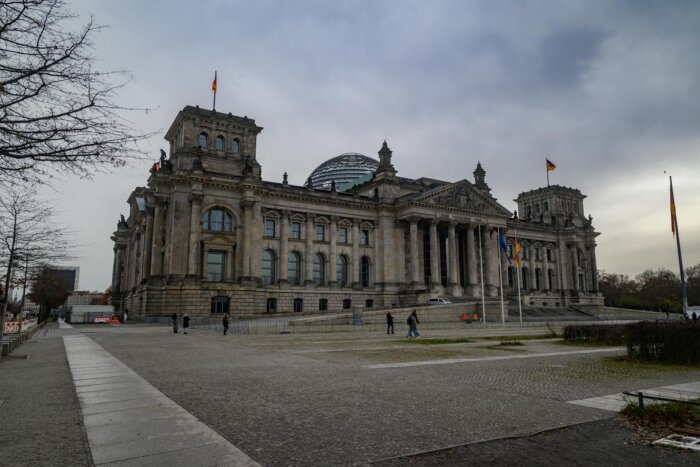
Cover image source: Pexels / Osviel Rodriguez Valdes (px:35098053)
Translated from the German original using artificial intelligence. The German version is authoritative.


