

CRITIS under pressure: Why the circular economy is becoming the touchstone for IT security
Waste management and supply industries are moving to the forefront of the KRITIS (critical infrastructure) debate amid NIS2, the convergence of…
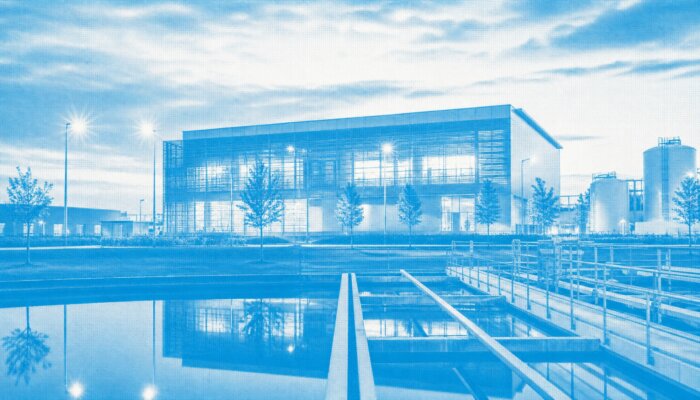
A look back at IFAT Munich 2026-and what the industry now expects from its IT partners.
Key Takeaways
- KRITIS sector under pressure: Waste management and utilities have moved to the center of the security debate due to NIS2, the Energy Efficiency Act (EnEfG), and the real threat landscape.
- IT meets OT: Control systems, SCADA, telemetry, and office IT are converging into a hybrid web with near-zero fault tolerance.
- synaforce at IFAT 2026: CTO Tobias Lehner and Head of Verticals Alexander Weber strategically used the trade fair to address the intersection of operational reality and regulatory demands in the KRITIS vertical of waste management and utilities.
Related:Platform Engineering for Compliance: IDPs Enforce NIS2 and DORA / Microsoft Claims Sovereignty-But Sovereign Over What?
The IFAT Munich is the world’s leading trade fair for environmental technologies. More than 142,000 visitors from around 170 countries, fully booked halls, a packed schedule. Anyone walking through the Munich exhibition grounds this year, however, could sense the shift in tone across the industry. The focus was no longer solely on container logistics, sorting systems, or new machinery. Instead, one question dominated every panel discussion: How do we protect the critical infrastructure of a society that is becoming ever more dependent on digital controls?
For Bavarian data-center and managed-security provider synaforce, IFAT 2026 was therefore more than just another industry event. CTO Tobias Lehner and Head of Verticals Alexander Weber strategically used the trade fair to address the very point where operational reality and regulatory expectations collide today: in the KRITIS vertical of waste management and utilities.
From niche issue to systemic challenge
Waste management, water supply and disposal, recycling infrastructure-what was long considered “basic operational services” has quietly but consistently moved to the heart of the security debate. In Germany, these sectors fall under Critical Infrastructure (KRITIS) and are therefore subject to the highest requirements for availability, integrity, and resilience. With the NIS2 Directive, the EU is tightening the screws further: the circle of affected entities is growing noticeably, reporting obligations are becoming stricter, and the personal accountability of managing directors is now so clearly in the spotlight that it has become a boardroom topic.
At the same time, real-world pressure in the field is rising. Cyberattacks on utilities and waste-management companies are measurably increasing, and the digitalization of operational processes is no longer a strategic option-it is a prerequisite for remaining economically viable. IFAT 2026 made it clear that the industry is responding: with automated sorting systems, IoT-driven route planning, predictive maintenance for wastewater treatment plants, and a water sector that increasingly sees itself as the technological backbone of society.
Conversations no white paper can replace
As insightful as the presentations were, the real substance of the trade fair-just as often-lay in the personal conversations away from the stages. That Johannes Wittmann (CEO Wittmann GmbH) and Karsten Witte (Wurzer Umwelt GmbH) were willing to speak openly about their security and operational challenges gave synaforce a far more precise picture of where SMEs and established family-run businesses in the waste management and circular economy actually stand today.

Why IT and OT can no longer be considered in isolation
Designing the security architecture for a waste handler or water utility is never just about traditional office IT. Control systems on conveyor belts, SCADA environments in pumping stations, telemetry from mobile collection vehicles, connections to municipal clients-it’s a hybrid web of IT and OT (Operational Technology) that must function in real time with an error tolerance that is effectively zero. An outage here isn’t a service incident; it’s a societal event.
This is precisely where synaforce steps in as an IT partner. The portfolio spans architecture consulting, transformation and migration, risk and vulnerability assessments, incident response and 24/7 monitoring of critical systems. What matters most, however, is not any single tool but the ability to integrate IT and OT into one consistent operations and security model-auditable, documented, and transparent to regulators.
Conclusion: Trade fairs as strategic compasses
The IFAT 2026 was more than networking for synaforce. It was a reality check: where is the sector heading, what burdens do operators truly carry, and where can a specialized IT-security partner deliver real added value? The fair’s answer is unequivocal. The circular economy is system-relevant. And system-relevant infrastructure deserves the best possible protection-not only when the next NIS2 deadline looms.
About synaforce
The Bavarian high-end datacentre and managed-security provider synaforce, with sites in Hofkirchen and Mainz, supports CRITICAL INFRASTRUCTURE operators with auditable operations models, ISO-certified datacentres and a “Made in Germany” XDR platform.
Frequently Asked Questions
Why is the circular economy now considered a critical infrastructure (KRITIS) sector?
Waste management, water supply and disposal, and recycling infrastructure are part of essential public services. If a supplier or disposal service fails, it has immediate consequences for the population, industry, and municipal clients. This means they fall under the highest requirements for availability, integrity, and resilience.
What changes does NIS2 bring for disposal and supply companies?
The NIS2 Directive expands the circle of addressees, tightens reporting obligations, and for the first time clearly places personal responsibility of managing directors at the forefront. IT security thus becomes a definitive boardroom topic.
What is the difference between IT and OT in this sector?
IT describes classic office systems, while OT (Operational Technology) includes control systems on production lines, SCADA in pumping stations, or telemetry from collection vehicles. Both worlds must work together in real time-with an error tolerance that is effectively zero.
What services does synaforce offer for KRITIS operators?
The portfolio ranges from architecture consulting and transformation and migration to risk and vulnerability analyses, including incident response and 24/7 monitoring of critical systems. The focus is on integrating IT and OT into a consistent, auditable operational model.
Why was IFAT 2026 strategically particularly relevant?
The trade fair demonstrated that the industry is actively digitalizing: automated sorting systems, IoT route planning, predictive maintenance, and connected water management. This modernization increases protection requirements-and highlights the need for specialized IT security partners.
Image source: AI-generated (Juli 2026)
Translated from the German original using artificial intelligence. The German version is authoritative.


