

DGX Spark vs. Mac Mini: Prefill counts
Community benchmarks show: DGX Spark dominates prefill, while the Mac Mini holds its own in token decoding. Buy the bottleneck-not the biggest number.
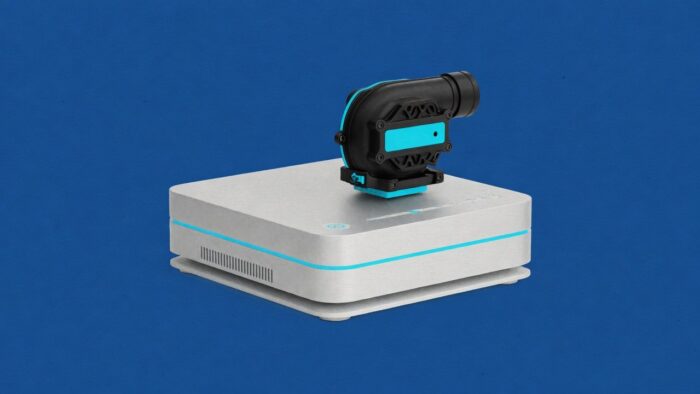
A community benchmark using the same 30B model has sharpened the local-AI debate: NVIDIA’s DGX Spark sits in a different league for prefill, while a significantly cheaper Mac Mini is surprisingly close for token decoding. Get it wrong and you’ll pay €4,000 for the wrong bottleneck fix.
Key Takeaways
- Prefill ≠ Decode. Spark excels at ingesting large contexts. Perceived response speed often hinges on decode.
- Price spread. DGX Spark sits in the low four-figure range; a well-specced Mac Mini is far below that.
- Buying rule. Long RAG/agent histories → prefill hardware. Chat and short loops → an Apple box or local GPU often suffices.
Related:Mac Studio M5: Tackling Cloud Workloads Efficiently / MacStadium and Scaleway Put the M5 Through Its Paces
The benchmark that reveals two truths
In a widely shared comparison, a Mac Mini M4 Pro, an AMD Strix Halo box, and DGX Spark ran the same quantized 30B model. During prompt processing (prefill), Spark pulled ahead with more than 2,000 tokens per second. During token generation-the part you watch while answers stream-all three clustered in the same band of roughly 50 to 85 tokens per second.
That explains why reviews sound contradictory. Some hail Spark as a desktop supercomputer. Others find the Mac Mini subjectively faster. Both camps can be right-it all depends on whether the bottleneck is context input or output throughput.
When prefill justifies the budget
Prefill becomes painfully expensive once agents push large codebases, long chat histories, or RAG chunks into context. Every new turn with a massive prompt eats time before the first token appears. That’s exactly where Spark hardware pays off: less waiting for the first meaningful output, better parallelism for batch jobs.
For DACH mid-market teams, the rule is: if your use case is “30-page PDF + repo + policy,” prefill power is worth it. If it’s “daily coding chat with 8k context,” you’re buying overkill.
Mac Mini as the counter-model
Apple Silicon wins on unified memory, silent operation, and hassle-free setup. For everyday inference-Ollama, local coding models, transcription-a well-specced Mini is often enough as long as the model fits in memory. The TCO edge lies in purchase price plus lower electricity, noise, and admin overhead.
Hybrid setups are the pragmatic middle ground: prefill-strong NVIDIA box for heavy contexts, Apple box for interactive decode and day-to-day automation. It’s architecturally more involved, but more honest than a single-box religion.
Decision without the marketing spin
Three questions before you click “buy”: (1) How large are typical prompts? (2) How often do multiple jobs run in parallel? (3) Do we need the CUDA ecosystem or will Metal/MLX suffice? If you can’t answer these three, measure first-don’t order.
What Teams Get Wrong When Measuring
Many procurement processes begin with a single tokens-per-second figure. That’s as incomplete as buying a car based only on top speed. For on-premises AI, three metrics matter: prefill for large contexts, decode during interactive chat, and throughput under parallel workloads. Optimizing for one number alone creates blind spots in daily operations.
In practice, a 48-hour log in your own stack helps: identical models, identical quantization, real prompts from tickets and repos. Add power draw and noise levels at the workplace. Only then can you tell whether DGX Spark-class prefill justifies the premium-or whether a Mac Mini with sufficient unified memory already solves your team’s bottleneck.
For mid-market teams in the DACH region, compliance enters the equation. A quiet desktop in the office can keep sensitive codebases and customer data local. That doesn’t replace a cloud policy, but it cuts unnecessary API exports. It’s this blend of performance profile and data control that turns hardware decisions into strategic moves, not just technical ones.
Frequently Asked Questions
What is prefill?
The phase in which the model processes input context before emitting tokens. Often the most expensive part with long prompts.
What is decode?
The generation of answer tokens. This is the speed you feel while reading the response.
Who benefits from DGX Spark?
Teams juggling large contexts, agentic pipelines, and reliance on the NVIDIA software stack-not casual chat users.
Is a Mac Mini enough for on-prem AI?
For many 7B–30B scenarios with adequate RAM, yes. For extreme prefill loads and CUDA-only tooling, probably not.
Are community benchmarks reliable?
They offer directional guidance, not purchase guarantees. Quantization, drivers, and software versions can swing numbers dramatically.
Editor’s Reading Picks
- Mac Mini as a 24/7 AI Workflow Server
- Mac Studio M5: Handling Cloud Workloads Efficiently
- MSI Cubi NUC AI+: AI Box That Fits Under Your Monitor
More from the MBF Media Network
MyBusinessFutureInvestment Bottlenecks: How AI Unlocks Hidden BudgetsDigital ChiefsIT Holds the Key to Spin-off SuccessSecurityTodayThe AI Act Is Really a Security LawImage source: AI-generated (July 2026)


