

Kinesis: Reducing Warm Throughput Is Now Possible
Kinesis warm throughput can now be lowered post-peak with an hourly demand safety net in place.
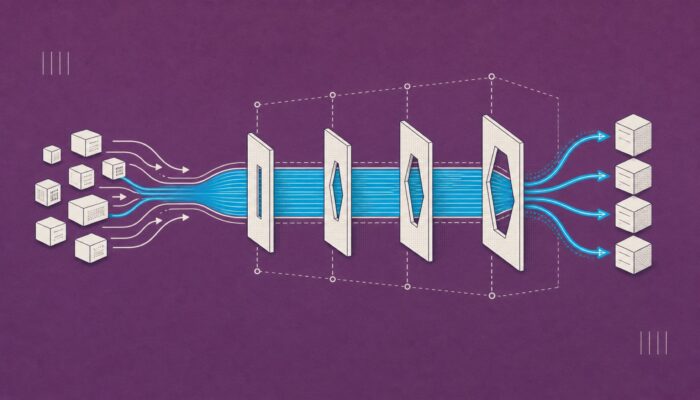
Amazon Kinesis Data Streams can now scale down warm throughput. For teams using On-demand Advantage, this eliminates the costly habit of remaining unnecessarily hot after peak loads-without incurring additional costs for scaling down.
The most important points at a glance
- Scale-down is here. Warm Throughput now dynamically adjusts write capacity upward before peak demand and scales it back down afterward.
- Safety net remains. The stream either returns to the desired value or adjusts to the demand of the last hour-whichever is higher.
- No extra charge. Scale-down is included at no additional cost for all on-demand streams with On-demand Advantage.
Related:The cloud maturity level that SMEs are fooling themselves into believing
Streaming costs rarely grow linearly with business cases. Instead, they expand based on what you keep “warm just to be safe.” That’s exactly where the announcement from July 24, 2026, comes into play.
Why Warm Throughput Was Good – and Expensive
On-demand streams automatically scale ingest capacity under rising load. With On-demand Advantage and Warm Throughput, teams could proactively reserve capacity-before campaigns, batch windows, or event days. That was the right approach as long as the peak arrived.
Afterward, too much warm capacity often remained. Manual adjustments were unpleasant. No one wanted to be the one who cut the stream too aggressively and left the next burst starving.
How downscaling works
You set a lower warm-throughput value on the on-demand stream. The stream adjusts to that value-or to the capacity that covers the peak of the last hour if that is higher. This leaves enough headroom for current traffic without permanently paying for the old peak.
Important: This is not a free “turn down to zero.” AWS protects ongoing traffic. For FinOps, this floor value is valuable because it removes the emotion from the discussion: Yes, you can scale down-but not blindly.
Practical workflow for platform and data teams
- Inventory streams. Which on-demand streams operate with Advantage and consistently high warm throughput?
- Analyze peak profiles. Separate daily, weekly, and campaign patterns. A nightly ETL requires a different warm plan than a clickstream.
- Define scale-down policies. Example: 60 minutes after peak end, set warm throughput to 130 percent of the rolling hourly average – never below the last-hour floor.
- Build automation. CLI, IaC, or runbook: the same command that scales up before an event must scale down afterward.
- Link costs and throttling. Configure CloudWatch alarms for write throttling and unexpectedly high warm capacity.
What changes for SMEs
Many DACH teams use Kinesis as “reliable but expensive if you operate it incorrectly.” Scale-down makes the lever tangible without purchasing a new product. The prerequisite remains On-demand Advantage. Teams still thinking purely in auto-scale mode should first verify whether Advantage is even enabled in their account-and whether they understand how it works.
FinOps without operational discipline is just slideware. With a strict up- and down-path, streaming capacity becomes a controllable parameter-hour-granular, much like Reserved Capacity for compute.
Source: AWS What’s New – Kinesis warm throughput scale-down (July 24, 2026).
Frequently Asked Questions
What is Warm Throughput in Kinesis?
Warm Throughput is a control feature within On-demand Advantage that allows teams to proactively reserve write capacity ahead of anticipated load spikes-such as before expected peak periods. While scaling up has traditionally been the primary focus, Warm Throughput introduces the ability to strategically scale down as well.
Can the stream drop too low?
No, not in the sense of a blind freefall: the stream adjusts based on either the desired target value or the traffic observed in the last hour-whichever is higher. Current traffic remains fully protected at all times.
Does scaling down incur extra costs?
According to the AWS announcement, Warm Throughput scale-down incurs no additional charges for all On-demand streams using On-demand Advantage. Standard Kinesis pricing applies to the capacity actually consumed during operation.
What’s the best first step to take?
Identify streams with consistently high Warm Throughput, document peak usage windows, and build an automated control that both scales up and down. Without a downward path, Warm Capacity remains a silent cost lever.
Editor’s Picks
cloudmagazinThe Cloud Maturity Level German SMEs Think They’ve AchievedcloudmagazinWhen One Region Fails, Half the Supply Chain StallscloudmagazinReal-Time Demand Forecasting: The Pipeline Holds the KeyMore from the MBF Media Network
MyBusinessFutureWhen Credit Workflows Get Stuck at the InboxDigital ChiefsOrphaned Accounts: The Silent Cybersecurity GapSecurityTodayServiceNow RCE: Six Checks Before the TicketImage source: AI-generated (July 2026)


