

Real-Time Demand Forecasting: The Pipeline Decides
Demand sensing stands or falls with the cloud data pipeline beneath it, not the model: real-time signals, streaming, a feature store and feed monitoring.
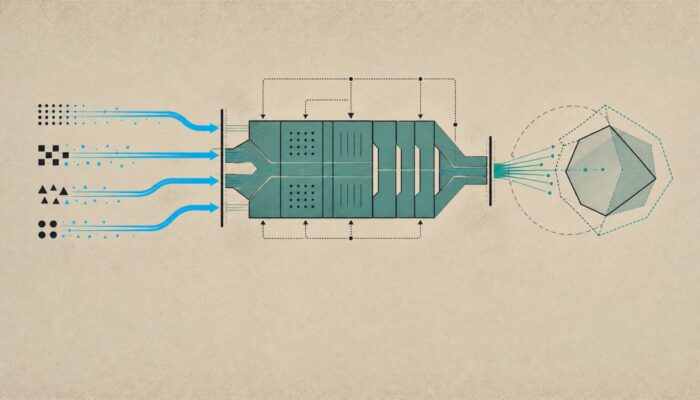
After years of stuttering supply chains, many companies want to move away from rigid monthly forecasts pulled from the ERP toward Demand Sensing: a forecast that continuously adjusts itself based on real-time signals. The catch for cloud teams is an uncomfortable one. The ML model is the easy part. The real work lies in the underlying data pipeline.
Key Takeaways
- Demand Sensing is primarily pipeline work. Numerous heterogeneous real-time feeds must be connected, kept current, and processed with controlled latency so forecasts can be recalculated daily or even more frequently.
- Without a stable baseline forecast, sensing amplifies errors. External signals require a reliable base forecast; otherwise they simply add further volatility.
- Streaming, feature store, and feed monitoring determine the value. Daily recalculations depend on event-driven architectures and seamless source monitoring, because a dead feed silently distorts the forecast.
Related:When One Region Falls, Half the Supply Chain Stops / Edge Computing in Logistics: 5 Building Blocks for Real-Time Operations
What Sets Demand Sensing Apart from Traditional Forecasting
Traditional demand forecasts in ERP systems typically run on monthly or quarterly cycles. They draw on historical sales figures, internal order backlogs and periodic batch processing. Demand Sensing compresses the planning horizon to one to six weeks and refreshes the forecast daily in many cases. It blends live signals-point-of-sale transaction data, real-time order flows, port and congestion feeds, weather information and macroeconomic indicators. Some platforms aggregate more than 200 external data sources.
The distinction lies in both update frequency and data variety. Whereas a classic forecast is refreshed only once a month, Demand Sensing reacts to shifts that matter within days. Providers and industry reports commonly cite 10 to 20 percent higher forecast accuracy and 5 to 10 percent lower inventory levels. Broader figures for AI-driven forecasting mention 20 to 50 percent fewer forecast errors and 10 to 15 percent reduced inventory costs. These numbers originate from vendors and industry analyses rather than independent comparative studies.
Why the Pipeline Is the Real Project
The model component is largely interchangeable. The real work lies in the data architecture that makes the signals available in the first place. Numerous heterogeneous external feeds must be integrated. Each source delivers at its own rhythm, in its own format, and with its own level of reliability. The pipeline must normalize, merge, and prepare this data so the forecast can actually work with it.
Data freshness and latency are not secondary considerations. They are the prerequisite. Weather information from yesterday is often already worthless for weather-dependent articles. A port feed with a delay of several hours is no longer suitable for short-term planning. Nightly batch processing therefore falls short. The architecture relies on streaming so that new signals flow in continuously.
A feature store bundles the prepared signals and ensures that models and downstream systems can access consistent, versioned features. Recalculation runs event-driven: a sudden order intake or a reported transport disruption can immediately trigger an update. With daily or more frequent recalculation, computational load increases. The cloud infrastructure must scale this load without costs spiraling out of control.
In the end, everything hinges on data quality. A single feed that fails or delivers incorrect values can silently distort the forecast for weeks. The impact often only surfaces in operational metrics when inventory levels or delivery performance deteriorate. Without systematic monitoring and alerts for outages or anomalies, the team notices the problem too late. The pipeline must therefore do more than transport data-it must continuously verify its origin and timeliness.
Without a Baseline, It’s Just Noise
Demand Sensing cannot fix a weak baseline forecast. It relies on a solid baseline forecast that captures historical patterns, seasonality, and internal drivers. When this foundation is missing or inaccurate, live signals misinterpret every deviation. Daily adjustments then amplify existing errors instead of correcting them.
That’s why experienced planning teams first insist on a stable traditional forecast that holds up across the relevant dimensions. Only once that foundation is in place do they gradually layer on the sensing component. External signals then serve as fine-tuning on a solid base-not a substitute for it.
What Teams Should Do Now
Starting small beats the big-bang approach. Instead of integrating all 200 available signals at once, a handful of reliable sources that teams truly understand and that have a clear link to demand are enough in the beginning. Data quality and latency management take priority over model selection. Feed monitoring must be built into the architecture from day one, not added as an afterthought.
Teams should raise compute frequency gradually. Many begin with daily runs and then assess where higher cadence delivers genuine operational value. The costs of additional compute load and ongoing feed maintenance must remain visible at all times-otherwise operational overhead will erode the gains from better forecasts.
The trend sets the direction. For mature planning functions, real-time or near-real-time forecasting will become standard by 2026. Monthly and quarterly planning cycles will shift from full replans to control points. Agentic AI-multiple collaborating agents handling planning, sensing, forecasting, and action-is emerging as a core architectural pattern. These agents are only as effective as the fresh, consistent features the pipeline delivers to them.
- A stable baseline forecast as a foundation is widely recognized in planning practice
- Streaming and feature stores are available and proven in cloud environments
- The importance of feed monitoring has reached infrastructure teams
- Operational effort and costs with many heterogeneous feeds and high frequency
- Long-term availability and consistency of external signal sources over years
- Clean integration of agentic patterns without introducing new silent error sources
Frequently Asked Questions
What is Demand Sensing?
Demand Sensing is a short-term demand forecast with a horizon of one to six weeks. It is often recalculated daily or more frequently and fuses live signals such as point-of-sale data, real-time order flows, port and congestion feeds, weather data, and even macroeconomic signals with internal planning data.
How does Demand Sensing differ from traditional forecasting?
Traditional forecasts operate on monthly or quarterly cycles and historical aggregates. Demand Sensing shortens the horizon and updates values frequently based on current external signals. Recalculation occurs event-driven rather than periodically.
What role does the cloud data pipeline play?
The pipeline integrates the many heterogeneous feeds, keeps the data current, and manages freshness as well as latency. It delivers streaming instead of batch processing, organizes the signals in a feature store, and enables event-driven recalculations. Without this infrastructure, the model loses its foundation.
What happens if a feed fails?
A dead or delayed feed silently distorts the forecast. The effects often only become apparent in operational metrics. Systematic monitoring of sources with alerts for failures or outliers is therefore an integral part of the pipeline architecture.
How should companies start with Demand Sensing?
Success begins with a stable baseline forecast and a few selected, reliable signals. Data quality and feed monitoring take precedence over selecting complex models. Computation frequency and the number of feeds are increased only gradually once the benefits are proven.
Editor’s Picks
cloudmagazinTrade Finance Without Document BacklogscloudmagazinContainer Supply Chain Security: Securing IT Supply ChainscloudmagazinSustainable IT: Making the Last Mile in Logistics GreenerMore from the MBF Media Network
MyBusinessFutureInvestment Backlog: How AI Uncovers Hidden BudgetsDigital ChiefsIT Decides Whether the Spin-off Pays OffSecurityTodayThe AI Act Is Actually a Security LawImage source: AI-generated (July 2026)


