

Mistral Supplies Microsoft with European GPUs
Billion-dollar deal: Mistral introduces Vera-Rubin GPUs in Europe, Microsoft provides Foundry, Copilot Studio, and Azure Local up to disconnected.
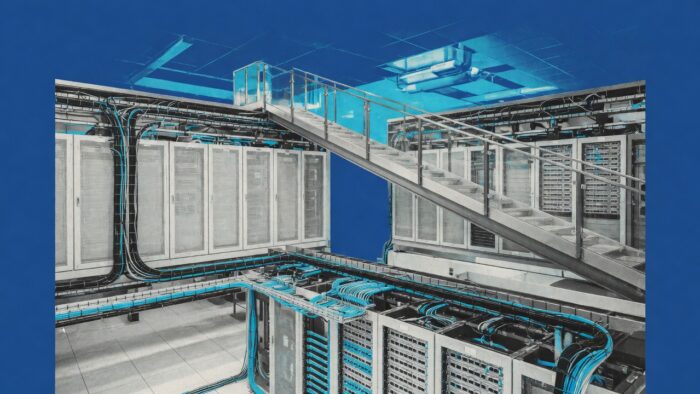
Microsoft and Mistral expand partnership with billion-euro deal for European GPU capacity. Mistral provides Vera Rubin clusters, Microsoft purchases capacity and delivers Medium 3.5 plus OCR 4 in Foundry, Copilot Studio, and Azure Local-all the way to fully isolated environments.
Key takeaways
- Infrastructure deal at its core. Microsoft commits to a multi-billion-euro investment in Mistral’s European GPU infrastructure, featuring thousands of NVIDIA Vera Rubin GPUs.
- Models integrated into Microsoft’s stack. Mistral Medium 3.5 and OCR 4 are deployed in Microsoft Foundry. Medium 3.5 is also available in Copilot Studio.
- Three operational modes. Cloud, cloud-connected, and fully disconnected via Azure and Azure Local. Same build path, different levels of control.
Related:Nadella’s Paradox – those who use AI pay twice / Grid connections become the bottleneck for AI data centers
What the deal actually buys
On July 21, 2026, Redmond and Paris announced capacity and distribution. A new capital investment wasn’t the focus. Microsoft will leverage Mistral’s European GPU infrastructure for its own cloud and AI services, while Mistral scales with the latest NVIDIA Vera Rubin systems. Brad Smith framed it as a commitment to Europe’s digital future. Arthur Mensch emphasized customer control over the technology.
For CIOs, the real story isn’t the press release. It’s about who computes where-and who provides the operational interface. Microsoft remains the integration and compliance layer, while Mistral delivers frontier and efficiency models plus European compute capacity. Azure customers will be able to develop using Mistral’s data centers in France. This is capacity-sharing rather than a API reseller arrangement.
Foundry, Copilot Studio, Local
Medium 3.5 and OCR 4 are landing in Microsoft Foundry, with Medium 3.5 also available in Copilot Studio. OCR 4 targets structured document pipelines and agentic workflows. Foundry Local and Azure Local bring the same development and runtime path to the edge: identical APIs, identical tools, different topology.
For regulated industries, the disconnected mode is the real selling point. Healthcare, manufacturing, and critical infrastructure often require operational modes without external connectivity. European branding alone won’t cut it. Microsoft is selling flexibility: public cloud, connected local instances, and fully isolated local deployments.
What sovereignty means here-and what it doesn’t
The deal expands Microsoft’s sovereign cloud narrative. But it doesn’t replace the hard scrutiny of key ownership, admin pathways, or subprocessors. Those who equate “European model” with “European control” are buying into a story. Medium 3.5 as open-weight in a managed Azure environment means the weights are accessible, but the operational framework remains Microsoft’s. That’s fair-but it must be called out in architecture reviews.
Compared to a pure US frontier stack, customers gain choice. Compared to building their own GPU farm, they save on operational overhead. And versus a direct Mistral relationship, they get enterprise identity, billing, and support within Microsoft’s ecosystem. Each alternative comes with its own failure modes.
Go-to-Market and PoC Budget
Both sides are announcing a joint go-to-market strategy, including PoC funding, Azure credits, and workshops. This is relevant for teams already planning model evaluations in 2026. However, it doesn’t replace your own load testing. Medium 3.5, OCR 4, and your data residency requirements must be measured in a real workload-not in a demo environment with pristine PDFs.
Power connections and electricity remain the physical bottleneck behind every GPU promise. More European capacity won’t shorten wait times for large-scale connections. The deal accelerates software availability faster than concrete and transformer stations can keep up.
Decision Points for the Architecture Board
Review three key questions in writing. First: Which operating mode is mandatory for which workload-not just desirable? Second: Is an exit to self-hosted open weights still realistic, or does Foundry lead into a convenient dead end? Third: Who owns the incident when Mistral capacity and the Azure control plane fail simultaneously? Without clear answers, this billion-euro deal is just another product slide.
For procurement and legal teams, it’s worth examining the joint GTM language. PoC credits lower the entry barrier while simultaneously creating a Microsoft-heavy operational framework. If you want to test a pure Mistral compute path or self-hosting in parallel, define the budget and success criteria before the PoC begins. Otherwise, the evaluation will end exactly where the credits were most convenient.
Operationally, observability across both sides is critical. Token metrics, region, model version, and local-vs-cloud routing must integrate into your existing dashboards. An incident without clear accountability between the model provider and cloud control plane is the costliest side effect of such partnerships.
Frequently Asked Questions
Is Microsoft investing further in Mistral equity?
According to reports and Microsoft statements, the focus is on capacity and distribution-not a new equity round at the core of the deal. The primary source is Microsoft’s official statement from July 21, 2026.
Which models are immediately relevant?
Mistral Medium 3.5 and OCR 4 in Foundry, with Medium 3.5 also available in Copilot Studio. Azure Local and Foundry Local expand the runtime path.
What does “fully disconnected” mean?
Azure Local deployments that can operate without external connectivity. This is useful for highly sensitive or mission-critical environments with strict isolation requirements.
Does this automatically ensure cloud sovereignty?
No. It offers expanded choice and European capacity. Keys, admins, logs, and exit scenarios remain your responsibility to verify.
Editor's Picks
cloudmagazinNadella’s Paradox – whoever uses AI pays twicecloudmagazinGrid connection is becoming the bottleneck for AI data centerscloudmagazinBanning Shadow AI: the costliest IT security reflexMore from the MBF Media Network
MyBusinessFutureThree days of update freeze: software supply chain flying blindDigital ChiefsWashington has a say in which AI may run hereSecurityTodayHugging Face breach: the alarm went off, triage never cameImage source: AI-generated (July 2026)
Translated from the German original using artificial intelligence. The German version is authoritative.


