

DuckDB and MotherDuck kill the warehouse theater
DuckDB embedded for local SQL power, MotherDuck for hybrid cloud-when in-house processing suffices and when serverless cloud analytics outshines idle…
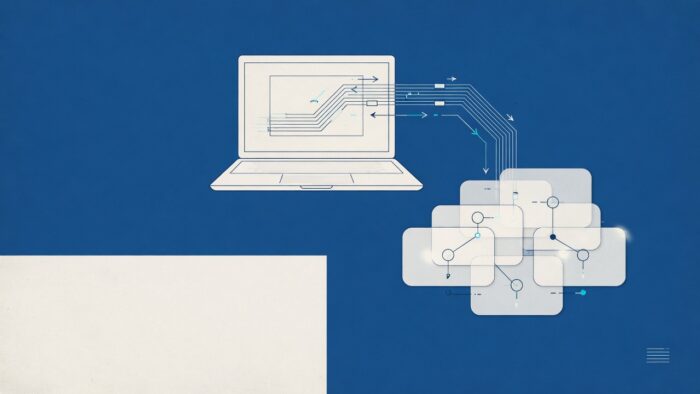
DuckDB runs in-process, while MotherDuck lifts the same SQL core into the cloud. For SaaS and analytics teams, this means less warehouse drama and more hybrid queries-from your laptop to multi-tenant mini-warehouses.
Key takeaways
- Embedded first. DuckDB analyzes data locally and in-app, eliminating the need for a separate server cluster for many workloads.
- Cloud hybrid. MotherDuck merges local and cloud data in a single query and scales serverlessly when single-machine limits kick in.
- Agent layer. Since June 2026, teams have been experimenting with agent-driven data ingestion on MotherDuck, shifting pipeline construction from pure ETL jobs to guided agent flows.
Related:Iceberg won the format war. Now the catalog counts / SAP to BigQuery: Data bridge with architectural consequences
Why the default warehouse feels too expensive in 2026
At the same time, pressure is mounting to embed analytics directly into products. Customer-facing charts, in-app reports, agent tools over domain data-all demand speed and isolation. A central warehouse *can* deliver this. But it doesn’t need to for every single row.
Many teams pay for idle compute on dashboards that run just three times a day. The classic cloud warehouse path scales horizontally and bills by reservation. DuckDB flips the script: the engine lives where the data already is-in your notebook, service, or CI job.
MotherDuck builds the cloud path on top of this. Hybrid query processing decides which part runs locally and which in the cloud. For data teams mixing Parquet on object storage with local samples, this eliminates the constant roundtrip to the big warehouse.
When local is enough-and when cloud becomes essential
Local DuckDB shines for interactive analysis, CI checks, feature pipelines, and embedded product analytics. Its limits? Concurrency, user management, and true multi-user isolation. That’s where MotherDuck steps in: with managed storage, sharing, isolation via hyper-tenancy concepts, and per-user compute.
The pattern is especially appealing for customer-facing analytics. Instead of a noisy multi-tenant cluster, each client gets an isolated mini-warehouse. One Layers case study describes how a SaaS provider avoided a projected 100× cost spike this way. These cases come from vendors, of course-they’re directional signals, not guarantees for your workload.
Agentic Ingestion Reshapes the Operational Contract
In June 2026, SiliconANGLE reported that MotherDuck added agentic data ingestion: agents are now tasked with creating, scheduling, and maintaining pipelines. This sounds like a productivity boost-but it also introduces a new failure mode. Granting agents write access to ingestion processes demands guardrails, budget caps, and reviews, just like any other deployment bot.
In practice, this means agents can scan staging sources and generate proposals. Production writes, however, remain behind approval gates. Logs and lineage tracking must clearly show which agent touched which table-otherwise, the “self-building stack” becomes an audit nightmare.
pg_duckdb deserves a closer look. The extension embeds DuckDB’s core into Postgres, accelerating analytical queries without immediately copying data into a second system. For teams running high-OLTP Postgres workloads with growing analytics demands, this often offers a smoother entry point than a big-bang warehouse project.
Governance remains non-negotiable. Object storage permissions, row-level security equivalents, and audit logs must be just as clear in this hybrid model as they are in a traditional warehouse. DuckDB makes SQL fast-it doesn’t magically simplify access control. If you’re building customer-facing analytics, test isolation with two tenants and a malicious join attempt before marketing flips the feature toggle.
Read the cost model honestly. Serverless per-second billing sounds cheap but can spiral with uncontrolled full scans. Implement query guards, default limits, and visible Euro-per-dashboard metrics. Otherwise, you’ll just swap idle cluster costs for idle scan costs.
Architecture Decisions Without Dogma
DuckDB won’t replace every lakehouse. What it *does* replace is the reflex to spin up an expensive warehouse slot for every analysis. Iceberg and catalogs remain the source of truth for large, shared datasets. DuckDB and MotherDuck often sit in front of or alongside them: fast, embedded, and cost-efficient when idle.
For mid-sized companies, the most honest test is a one-week PoC. Take your five most expensive ad-hoc queries and your one customer-facing analytics workflow. Measure cost, latency, and operational overhead against the status quo. If idle time dominates your bill, the DuckDB path isn’t hype-it’s FinOps with SQL.
Frequently Asked Questions
Is MotherDuck just “DuckDB in the cloud”?
At its core, yes-plus managed storage, hybrid queries, sharing, and isolation. The SQL engine remains DuckDB, while the operational framework shifts to serverless.
Does this replace BigQuery or Snowflake?
For many interactive and embedded workloads, partially. For massive enterprise warehousing landscapes with complex governance, it often serves as a complement rather than a drop-in replacement.
What is agentic ingestion?
Agents generate and maintain data pipelines. This speeds up setup but increases the risk of uncontrolled writes. Production environments require guardrails.
Is there legacy CM coverage for DuckDB?
No. The slot is intentionally fresh, filling a thematic gap alongside Iceberg and BigQuery coverage.
Editor's Picks
cloudmagazinIceberg won the format war. Now the catalog countscloudmagazinOpenTelemetry: Instrument once, choose your backend freelyMore from the MBF Media Network
MyBusinessFutureCheap AI from China: What procurement needs to checkDigital ChiefsWashington has a say in which AI can run hereSecurityTodayHugging Face breach: Alarm sounded, triage failedImage source: AI-generated (July 2026)
Translated from the German original using artificial intelligence. The German version is authoritative.


