

AI Drives Semiconductor Market Back to Strong Growth
After a 2023 sales slump, the semiconductor market is growing double-digits again thanks to AI advancements.
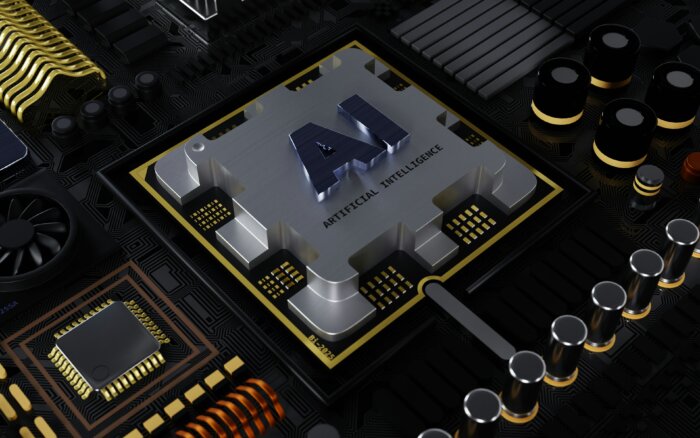
In 2023, semiconductor revenues were still in double-digit decline. Thanks to artificial intelligence, however, Gartner forecasts a near 19% jump to around $630 billion in 2024, followed by a further 14% increase to almost $717 billion in 2025.
The Key Points at a Glance
- The global semiconductor market is set to grow by 18.8% to $629.8 billion in 2024, rebounding from an 11.7% decline the previous year.
- Artificial intelligence is driving massive demand for high-performance GPUs, particularly from Nvidia.
- Nvidia’s latest AI accelerators in the Hopper and Blackwell series each cost over $20,000.
- HBM memory revenues are projected to surge by 284% to $12.3 billion in 2024 and climb to $21 billion in 2025.
- Total memory chip revenues are expected to reach $196.3 billion in 2025, accounting for over 27% of the semiconductor market.
Hardware has long been seen as a loss leader. Yet Nvidia’s meteoric rise into the elite club of companies valued at over a trillion dollars underscores how high-performance graphics chips (GPUs) have become the hottest commodity since the generative AI boom sparked by ChatGPT. This surge is breathing new life into the global semiconductor market after years of stagnation.
Gartner forecasts 18.8% growth for 2024, pushing the market to $629.8 billion – up from a 11.7% contraction in 2023, when it shrank to $530 billion. For 2025, the U.S. research firm anticipates a still-strong but more moderate growth of 13.8%, lifting the market to $716.7 billion. The memory chip segment, too, is experiencing a powerful upswing.
High-performance GPUs are the workhorses
According to Gartner, the key driver of this development is artificial intelligence – and the high-performance GPUs demanded by ChatGPT and similar applications, which have primarily benefited Nvidia. While the company still refers to its AI accelerators as GPUs, tech publication Heise notes that these are no longer traditional graphics cards and have seen a slight decline in 3D rendering performance. The latest Nvidia accelerators from the Hopper and Blackwell generations cost well over $20,000. Heise also points out that additional server components add to the total expense.
Demand for High Bandwidth Memory (HBM), the fastest memory used by AMD, Nvidia, and others in their AI accelerators, is surging. HBM revenues are projected to skyrocket by 284% to $12.3 billion in 2024 and then climb another 70% to $21 billion in 2025.
DRAM memory manufacturers are also reaping the benefits. Revenues, including those from DDR5 and DDR4 RAM, are expected to reach $90.1 billion in 2024 and rise to $115.6 billion in 2025.
Supply constraints for DRAM and NAND flash chips have further boosted manufacturers’ fortunes, driving up prices – and profitability – for SSDs. After a previous slump, NAND flash prices have rebounded sharply, rising by 60%. As a result, global revenues are forecast to reach $67 billion in 2024 and exceed $75 billion in 2025.
For all memory chips combined, market researchers project revenues of $196.3 billion in 2025, accounting for just over 27% of total semiconductor revenues.
Frequently Asked Questions
What’s driving the semiconductor market’s strong growth in 2024?
The surge is primarily fueled by soaring demand for AI hardware, especially high-performance GPUs. AI applications like ChatGPT have significantly increased the need for powerful chips.
How is Nvidia positioned in today’s market?
Nvidia is a major beneficiary of the AI boom, as its high-performance GPUs are widely used as AI accelerators. The company’s latest Hopper and Blackwell generations each cost well over $20,000.
What is High Bandwidth Memory (HBM), and why does it matter?
HBM is ultra-fast memory used in AI accelerators from Nvidia and AMD. Demand is skyrocketing, with revenues expected to jump 284% to $12.3 billion in 2024.
What’s happening with NAND flash memory prices?
After hitting a low, NAND flash memory prices have rebounded by around 60%. Production bottlenecks have led to higher – and more profitable – SSD prices.
How big is the memory chip segment in the overall semiconductor market for 2025?
Memory chips are projected to generate $196.3 billion in revenue in 2025, accounting for roughly 27% of the total semiconductor market.
Editor’s Picks
cloudmagazinAPI-First: Why Modern Cloud Architectures Succeed or Fail at the API Design StagecloudmagazinPretext: Can a JavaScript Library Solve the Browser’s 30-Year-Old Problem – or Is It Just Hype?cloudmagazinAWS vs. Azure vs. Google Cloud 2026: An Honest Comparison for DACH EnterprisesMore from the MBF Media Network
SecurityToday | MyBusinessFuture | Digital Chiefs
Source header image: Unsplash / BoliviaInteligente


