

Off to the Desert: OpenAI Plans to Build a Mega Data Center in Abu Dhabi
TL;DR OpenAI plans to build one of the world’s largest AI data centers in Abu Dhabi, with a capacity of five gigawatts. The facility will span 26 square kilometers – larger than …
TL;DR
- OpenAI plans to build one of the world’s largest AI data centers in Abu Dhabi, with a capacity of five gigawatts.
- The facility will span 26 square kilometers – larger than Monaco – and require immense amounts of energy.
- Energy supply in the UAE is secured through both fossil fuels and increasingly renewable sources.
- Local partner G42 is involved; its CEO, Peng Xiao, is Chinese, raising U.S. concerns about potential technology transfer to China.
- Microsoft invested $1.5 billion in G42 and actively participates to ensure control and transparency.

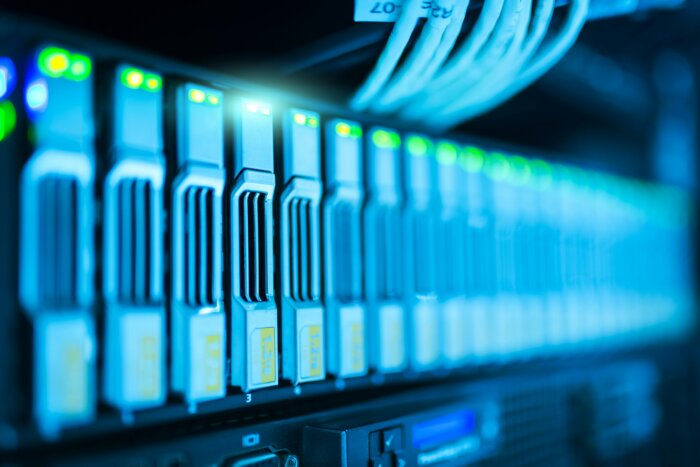
Energy for data centers is abundant in the region – both fossil-based and renewable. Image source: Pexels/Diego Vivanco
To meet its rapidly growing demand for computing power, OpenAI is planning to build a mega data center in the United Arab Emirates. However, the fact that the CEO of its local partner is Chinese has sparked concerns in the U.S. about possible technology transfer to the People’s Republic of China.
Deserts – sometimes extremely hot – are perhaps not ideal locations for data centers. Yet they offer a key advantage: abundant energy, available both from fossil fuels and, increasingly, renewable sources.
This very idea inspired the Club of Rome back in 2009 to launch the Desertec Foundation, aiming to meet Europe’s energy needs through massive solar power plants across North Africa and the Middle East. Just before the Arab Spring, the initiative appeared so promising that even Munich Re took a leading role.
Five Gigawatts – Equivalent to Millions of Households
Beyond energy availability, the UAE offers vast land areas and politically favorable conditions for large-scale projects that might face resistance elsewhere. This likely played a decisive role in OpenAI’s decision to plan one of the world’s largest AI data centers in Abu Dhabi, according to t3n, citing the U.S. news agency Bloomberg.
Once completed, the entire facility is expected to have a capacity of five gigawatts and cover 26 square kilometers – making it larger than the Principality of Monaco. This planned capacity would be more than four times that of the first “Stargate Center” currently under construction in Texas, which is designed for just 1.2 gigawatts. According to t3n, five gigawatts roughly equals the output of five nuclear power plants or the energy consumption of several million households.
A crucial component of this mammoth project is the local tech company G42, serving as OpenAI’s on-the-ground partner. While the majority shareholder and chairman of G42 is Sheikh Tahnoon bin Zayed Al Nahyan – brother of the UAE’s head of state and the country’s National Security Advisor – the company is actually run by its CEO, Peng Xiao, who is Chinese.
Is concern over technology transfer to China now resolved?

Despite withdrawing from China, the partnership with Microsoft and OpenAI continues to spark debate over potential technology transfer. Image source: Pexels/Tara Winstead
This has become a point of contention and criticism in the U.S., where fears persist that the joint venture could serve as a vehicle for transferring sensitive technology to China. These concerns are heightened by G42’s past ties to Chinese companies on the U.S. sanctions list, such as Huawei and the Beijing Genomics Institute.
However, Peng Xiao stated in early 2024 that G42 had divested all Chinese investments and no longer maintains any presence in China. Shortly thereafter, as reported by Bloomberg and t3n, Microsoft invested $1.5 billion in G42, with Microsoft President Brad Smith joining the company’s board of directors. OpenAI had already announced a partnership with G42 in 2023 to advance AI adoption in the Middle East – a move that had already drawn criticism in the U.S. at the time.
The planned Abu Dhabi data center is setting benchmarks not only due to its sheer scale but also because it raises complex geopolitical questions.
These begin with the issue of who controls the data centers that underpin the knowledge of the future. This question of technological sovereignty is currently preoccupying the EU as well, amid growing dependence on both China and the U.S. Countering the increasing AI dominance of these two powers requires looking beyond one’s own borders – and forming alliances with the Arab world, much like the Desertec Foundation once envisioned.
Frequently Asked Questions
Why is OpenAI building a data center in the United Arab Emirates?
The UAE offers vast land, political stability, and abundant energy from both fossil and renewable sources – ideal conditions for energy-intensive AI data centers.
How big will the planned Abu Dhabi data center be?
The facility is expected to reach a capacity of five gigawatts and span 26 square kilometers – larger than the Principality of Monaco.
What role does G42 play in the project?
G42 is OpenAI’s local technology partner in the UAE. Although its majority owner is an Emirati sheikh, the company is led by Chinese CEO Peng Xiao.
Why is there criticism in the U.S. regarding the collaboration with G42?
Critics worry about potential technology transfer to China, given G42’s Chinese CEO and the company’s past links to sanctioned Chinese firms.
How is Microsoft addressing concerns about G42?
Microsoft invested $1.5 billion in G42 and appointed its president, Brad Smith, to the company’s board to ensure transparency and Western oversight.
Editor’s Picks
cloudmagazinAPI-First: Why modern cloud architectures live or die by API designcloudmagazinPretext: Does a new JavaScript library solve a 30-year-old browser problem – or is it just hype?cloudmagazinAWS vs. Azure vs. Google Cloud 2026: An honest comparison for DACH businessesMore from the MBF Media Network
SecurityToday | MyBusinessFuture | Digital Chiefs
Header Image Source: Pexels/panumas nikhomkhai


