

Opus 4.7 vs GPT-5.4: Why European cloud providers back local AI
Benchmark comparison Opus 4.7 vs GPT-5.4, plus how IONOS, STACKIT, OVHcloud, and Exoscale are making local AI inference production-ready by 2026.
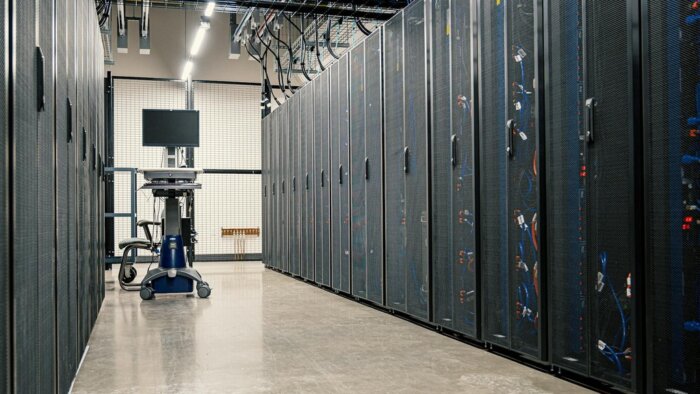
Claude Opus 4.7 and GPT-5.4 are neck and neck in the latest benchmarks. For German and European teams, the real difference often isn’t the model itself, but where inference happens. Those taking GDPR concerns, data residency, and audit trails seriously will be looking more closely at IONOS, STACKIT, OVHcloud, and Exoscale by 2026 than at the logo in the prompt field.
Key takeaways
- Benchmark deadlock. Opus 4.7 leads in SWE-bench Pro and MCP-Atlas, while GPT-5.4 tops BrowseComp. Differences range from five to ten percentage points, depending on the task profile.
- EU inference becomes viable. IONOS, STACKIT, OVHcloud, and Exoscale now offer token pricing on open models. For sensitive workloads, this is often the deciding factor.
- Sovereignty is no longer optional. The EU Cloud Sovereignty Framework from October 2025 is reshaping how public sector and regulated industries procure cloud AI.
RelatedAI inference costs: FinOps for GPU workloads / Deploying Gemma 4 locally
What the Benchmarks Really Say in April 2026
Anthropic released Opus 4.7 on April 16, six weeks after GPT-5.4. The new figures are documented and market-validated: SWE-bench Pro scores 64.3 percent for Opus, 57.7 for GPT-5.4. MCP-Atlas 77.3 versus 68.1. OSWorld-Verified 78.0 versus 75.0. In GDPVal-AA, Opus leads with an Elo of 1753, while GPT-5.4 sits at 1674. OpenAI’s only clear lead is in BrowseComp, with 89.3 versus 79.3. The task profiles differ: Opus excels in agentic coding and tool use, GPT-5.4 in structured web browsing.
For procurement decisions, this means: if you have a clearly dominant workload, you can match the benchmark against your real-world job profile and make a choice. If you’ll need both capabilities—and that’s most organizations in practice—you’ll go with the provider whose data pathways, billing, and compliance framework fit. This is exactly where European cloud providers are becoming significantly more relevant in 2026 than they were just twelve months ago.
Context behind the numbers matters. SWE-bench Pro measures agentic coding over extended sessions, MCP-Atlas evaluates tool-use quality within real-world toolchains, and GDPVal-AA assesses the breadth of knowledge work in administrative settings. If you’re launching a call center automation project today, you won’t come close to either model’s benchmark highs—because your use case is narrower. The benchmark table is a decision aid, not a guarantee. Buyers should treat it as a guideline; internal evaluation on your own dataset delivers the real performance metrics.
| Benchmark | Opus 4.7 | GPT-5.4 | Lead |
|---|---|---|---|
| SWE-bench Pro | 64.3 % | 57.7 % | Opus +6.6 |
| MCP-Atlas (Tool-Use) | 77.3 % | 68.1 % | Opus +9.2 |
| OSWorld-Verified | 78.0 % | 75.0 % | Opus +3.0 |
| GDPVal-AA (Elo) | 1753 | 1674 | Opus +79 |
| BrowseComp | 79.3 % | 89.3 % | GPT +10.0 |
Source: Anthropic Announcement 04/16/2026, Vellum AI Benchmark Review, DataCamp Opus vs GPT-5.4 Analysis.
Prices, meanwhile, remain the quiet factor: Opus 4.7 continues at five US dollars per million input tokens and twenty-five dollars for output. GPT-5.4 Pro is in a similar range. In most cases, the price difference matters far less than whether tokens are even allowed to leave the EU.
What European Cloud Providers Will Deliver in 2026
IONOS operates its AI Model Hub from Germany, offering token-based pricing on open models (Llama, Mistral, and Qwen families), RAG-ready embedding models, and vision-language services for OCR workflows. Billing applies only to input tokens for embeddings, with no vendor lock-in. STACKIT, increasingly visible in the market since 2024 as a Deutsche Telekom subsidiary, is expanding its compute foundation: the new AI data center in Lübbenau targets GPU workloads that remain entirely within Germany and Austria. OVHcloud operates 46 data centers, including a solid cluster in France, Germany, Poland, and the UK. Exoscale, with seven locations across Switzerland, Austria, Germany, Croatia, and Bulgaria, positions itself as the choice for teams for whom Swiss jurisdiction matters.
The shared message: GDPR compliance and data residency aren’t features—they’re built into the architecture. This may sound like marketing at first glance, but it’s precisely the point where procurement, legal, and IT teams can finally have concrete discussions. When an auditor asks where tokens reside during training or inference, these four providers already have answers that don’t require layering additional contractual agreements.
On the model side, the selection of open-weight models in 2026 is pragmatic enough to close the frontier gap for most business applications. Meta’s Llama 4 Scout and Maverick perform close to closed models in many RAG tasks. Mistral Large 3 and Codestral cover code generation and reasoning. Qwen3 235B from Alibaba’s open series ranks between Opus and GPT-5.4 in benchmarks, though it shows weaknesses in agentic tool use. DeepSeek V3.1 often emerges as the most cost-attractive option in terms of throughput and pricing. European providers deliver these models production-ready, complete with SLAs and monitoring—no need to operate your own GPU fleet.
At the same time, pricing benchmarks are shifting. Those who paid a few cents per token at the end of 2024 will pay a fraction of that by 2026—especially when using openly hosted services. This unlocks volumes previously blocked by cost. Automated document processing for SMEs, contract compliance checks, internal knowledge bases with tens of thousands of pages—everything becomes viable with EU providers, whereas using hyperscalers with Opus-level pricing can quickly push monthly costs into five figures for a mid-sized team.
The framework doesn’t introduce new obligations for the private sector, but it sets the standard. Any company aiming to participate in public tenders must obtain clear answers in the coming months—answers that previously relied on custom clauses in negotiations with hyperscalers. For regulated industries (banking, insurance, healthcare, critical infrastructure), this acts as a catalyst for adopting EU-based inference solutions.
Where Local Inference Makes Sense—and Where It Doesn’t
The honest assessment: Not every workload belongs on an EU-based provider. Not every workload performs equally well there. Opus 4.7 and GPT-5.4 deliver their full quality only with Anthropic and OpenAI, or their certified cloud partners (AWS Bedrock, Google Cloud Vertex, Microsoft Azure OpenAI). Organizations that require these models in their top-tier versions will need to stay with those providers—for now. But those using open models and consciously operating one or two quality tiers below can cleanly shift their architecture to EU-based inference.
Arguments Against EU Inference
- Workload strictly requires top-quality Opus 4.7 or GPT-5.4 Pro
- Agent-based coding tasks with high benchmark sensitivity
- Multi-modal workflows involving image and video generation at frontier quality
- Teams lacking capacity for prompt engineering on open models
Arguments For EU Inference
- RAG and embeddings on internal documents
- Customer communication and support involving personal data
- OCR and document processing in financial and healthcare contexts
- Public administration, critical infrastructure, SECA-relevant tenders
The reality in many organizations is a hybrid setup: frontier models hosted with hyperscalers for the few tasks that truly require them, and EU-based inference for the majority of RAG, classification, and assistance workloads—where quality is sufficient and compliance costs under US-based routes rise disproportionately. Those who clearly separate these use cases are less likely to run into audit findings.
A real-world example illustrates this balance: A mid-sized Munich-based insurer launched its customer service chatbot on a frontier model via Azure in 2025. Within six months, roughly 80 percent of prompts had migrated to a Llama model hosted in the EU, where both compliance requirements and the monthly token budget were a better fit. The remaining 20 percent—long, complex complaint cases requiring legal depth—still run on the more expensive frontier model. This hybrid split wasn’t a strategic decision, but an audit-driven adjustment—and it ultimately saved the project.
How Teams Can Plan the Transition by 2026
For CIOs and cloud architects just beginning this journey, a clear and manageable process has proven effective. It prevents the common pitfall of ending up with two parallel stacks—neither of which anyone fully manages.
The biggest mistake teams made during 2025 pilot phases was moving forward without establishing a baseline. Either everything went to hyperscalers because Opus and GPT were readily available, or everything shifted to EU providers because compliance was the loudest stakeholder. Both approaches led to disputes six months later—disputes that could have been avoided. A clean inventory with traffic-light classification creates the shared understanding procurement, legal, and architecture teams need to align.
In practice, it’s worth repeating the quality baseline from step four on a quarterly basis. EU providers’ models are evolving quickly, built on new open-weight models updated every four to eight weeks. A model that lagged 15 percent behind a Frontier model in January might match it by April. Teams that freeze their baseline miss out on savings potential—savings that directly show up on IT cost center metrics.
The political dimension adds another layer. EU inference has become a checkbox in many board proposals—a requirement that simply must be present for approval. This isn’t a technical argument, but it influences budget decisions. Anyone building their AI stack today should ensure at least one production workload is measurably running on a EU provider. Not as token compliance, but as proof that the organization has evaluated and understands the option.
Frequently Asked Questions
Is Opus 4.7 actually better than GPT-5.4, or is the difference negligible in practice?
Across the board, Opus 4.7 leads in six out of nine directly comparable benchmarks, with advantages of six to nine points in three of them. That’s measurable, but not dramatic. For agent-based coding and tool use, switching to Opus is worthwhile. For browsing tasks, GPT-5.4 remains the stronger choice.
Are Opus 4.7 or GPT-5.4 available via European cloud providers?
No. The top versions of these two models are only available through Anthropic and OpenAI themselves, as well as their certified hyperscaler partners. IONOS, STACKIT, OVHcloud, and Exoscale host open models, typically from the Llama, Mistral, Qwen, and DeepSeek families. Their quality suffices for most RAG, classification, and assistant workloads.
What exactly does the EU Cloud Sovereignty Framework change?
The framework defines a scale for assessing cloud services’ digital sovereignty. Public procurement will rely on these levels starting in 2026. In regulated industries, the framework indirectly becomes the standard, as auditors and regulators align with it.
How expensive is EU-based inference compared to AWS Bedrock or Azure OpenAI?
Token prices at IONOS and OVHcloud are in a similar range as those of the hyperscalers—sometimes slightly lower. The real difference lies not in sticker prices, but in data transfer, network connectivity, and audit effort. For workloads involving personal data, EU providers often reduce compliance overhead, which impacts total cost of ownership.
Is a routing layer between frontier and EU models sufficient for production use?
Yes, provided it’s well-built. Open abstractions like LiteLLM or Portkey support all major providers and enable policy-based routing per prompt type. Crucially, logging and evaluation must run identically across both paths; otherwise, teams lose visibility into quality differences.
Header image source: Pexels / panumas nikhomkhai (px:17489152)
Translated from the German original using artificial intelligence. The German version is authoritative.


