

Mini-PC Market 2026: IDC, Gartner & Minisforum Reveal Edge Trends
IDC + Gartner forecast volatile PC prices and a 55% AI-PC share for 2026. What this means for DACH edge deployments.
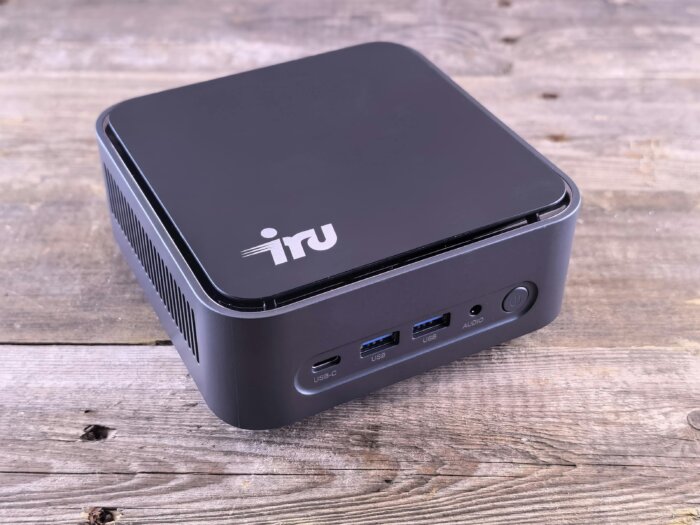
The PC market in 2026 will be dominated by the AI PC boom, according to IDC and Gartner, while CPU and memory shortages are hitting the entire industry. At CES 2026, Minisforum made its position clear with the AI X1 Pro-470 and the MS-02 Ultra Mini Workstation — signals pointing to where mini PCs are headed for enterprise use. For DACH IT teams planning edge deployments, this is no niche observation; it’s a budget decision with consequences for the next 18 months.
Key Takeaways
- AI PC dominates the forecast: Gartner expects 143 million AI PCs shipped globally in 2026, accounting for roughly 55 percent of the total market (Computerworld citing Gartner data).
- Minisforum at CES: In early January 2026, the company announced the AI X1 Pro-470 and the MS-02 Ultra Mini Workstation, both focused on high CPU performance, Oculink, and USB4 for enterprise and developer scenarios (Minisforum CES press release).
- Price shock remains real: IDC Research Vice President Jean Philippe Bouchard warns of an extremely volatile PC market in 2026, triggered by shortages in CPUs and memory components.
- A growing segment: Gartner reports a 4 percent year-over-year increase in global PC shipments for the first quarter of 2026, driven by enterprise refresh cycles and an AI PC focus.
- Local AI moves to the fore: IDC analysis indicates that 40 percent of software vendors will prioritize investment in device-based AI capabilities by the end of 2026, up from just 2 percent in 2024.
RelatedThinkCentre M90q Gen 6 as an Edge Device / AI Inference Architecture for DACH 2026
What PC market research shows for 2026
What is a mini PC? A mini PC is a fully functional x86 or ARM computer with a dramatically reduced chassis volume, typically between 0.5 and 2 litres. It runs the same software and operating systems as desktop and laptop systems, but foregoes expansion slots in exchange for a significantly smaller footprint and, in most cases, lower power consumption. In enterprise deployments, mini PCs serve as kiosk systems, edge devices on production floors, branch office computers, or developer workstations in space-constrained environments.
Market research from the first half of 2026 paints a clear picture. Gartner reported on 10 April 2026 that global PC shipments rose four percent in the first quarter, driven by enterprise refresh cycles following the Windows 10 end-of-support deadline and the first major AI PC rollouts. IDC follows with a full-year forecast that flags volatility, triggered by processor and memory shortages. This has direct implications for procurement planning: delivery dates and prices are harder to predict this year than in previous ones.
For the mini PC category, that is not a disadvantage. On the contrary, demand for compact, edge-capable systems is growing in parallel with the AI PC trend. Anyone running local inference has fewer reasons to rely on traditional tower workstations — and ever more reasons to look at space-saving alternatives that still bring enough CPU and GPU resources to the table.
Source: Gartner via Computerworld, April 2026.
Minisforum at CES 2026
Minisforum took to CES in January 2026 with a message of uncompromising mini PCs. Two products stood out and are worth noting for enterprise observers. The AI X1 Pro-470 explicitly targets AI workloads with a powerful CPU and integrated NPU, positioned as a compact mini PC with serious inference capability. The MS-02 Ultra Mini Workstation goes a step further, aimed at power users who have relied on tower workstations until now but want to reduce their form factor.
Both models offer Oculink and USB4 interfaces, which becomes relevant for connecting external GPUs and storage chassis. In enterprise scenarios such as video editing, simulation, or local inference of large models, this is not a gimmick — it is a genuine architectural option. You buy the mini PC as the compute base, then extend it via Oculink with accelerators needed only part of the time. The base footprint stays small.
The difference from established mini PCs by Lenovo, HP, and Dell lies not in performance but in positioning. Minisforum serves a customer base that places less value on traditional enterprise management stacks and 24-hour support, while expecting competitive performance at often lower prices. For mid-sized DACH companies with smaller IT departments and developer teams, this is a real alternative — not just a niche solution.
What the market data means in practice for DACH teams
The combination of market volatility and AI-PC focus is reshaping procurement strategy. Three consequences will define planning in Q2 and Q3 2026.
First, the lead-time dimension. Anyone looking to procure a hundred or more devices this year should budget eight to twelve weeks of order lead time, depending on configuration. The era of one-week delivery windows is over for now. Projects that depend on July delivery should place orders no later than May.
Second, budget fluctuation. According to IDC, prices in 2026 are extremely volatile. Negotiating a framework agreement with fixed pricing today buys planning certainty. Betting on spot prices is a gamble. The classic anti-hoarding policy of some procurement departments — ordering on demand — pays off less in this market phase than in normal conditions.
Third, the AI-PC filter. Procuring mini PCs today without an NPU or AI acceleration means buying hardware that could fall outside the support commitments of key software partners within 18 months. The IDC-projected threshold at which 40 percent of software vendors require device-side AI is not theoretical. Microsoft, Adobe, Autodesk, and other major vendors have already announced that certain features in upcoming versions will require local NPU acceleration.
Market landscape in Q2 2026
| Category | Established enterprise brands | Specialists such as Minisforum |
|---|---|---|
| Target audience | Corporate IT, regulated industries | SMEs, developers, specialised use cases |
| Management integration | Intel vPro, AMD DASH, MDM-ready | configuration-dependent, often standard tools |
| Performance range | broad, from entry-level to high-end | often high-end focus with strong CPU-GPU mix |
| Connectivity | USB-C, DP, HDMI, GbE | USB4, OCuLink, sometimes 10 GbE options |
| Support model | Premier support, 24-hour replacement | standard warranty, on-site service rare |
| Price positioning | premium, via framework agreement | competitive, often direct purchase |
Assessment based on public product data from respective manufacturers, and Gartner and IDC commentary on the PC market in Q1 2026.
Five Questions Before the Procurement Decision
From a DACH enterprise perspective, a structured screening of your own requirements pays off before brand and model are selected. The following five questions have proven to be a practical filter.
First: does the device need to run in an existing MDM stack with deep vPro or DASH integration? If yes, that significantly narrows the field. If no, the door opens to specialized vendors like Minisforum.
Second: does the use case require local AI inference with NPU or GPU support? If yes, AI PC configurations with dedicated acceleration are mandatory — otherwise the use case will fall outside software vendors’ support commitments within 12 months.
Third: how many devices are going into the rollout? Smaller fleets of under 30 units can accommodate a less standardized brand; larger fleets beyond 200 units require a vendor with a solid framework agreement and guaranteed service parts.
Fourth: what service levels are required? A branch office machine that triggers a customer service incident when it goes down needs 24-hour replacement. An internal developer workstation can tolerate multi-day shipping.
Fifth: how volatile is your procurement budget? Organizations working with fixed annual budgets should negotiate framework agreements with a fixed-price component. Those with more flexibility can benefit from seasonal price fluctuations — but risk unwelcome surprises.
Three Workload Profiles and the Right Device for Each
Market data only becomes actionable when mapped to concrete workload profiles. Three profiles cover the majority of DACH enterprise scenarios, each with its own device recommendation.
The first profile is the classic office workstation running collaboration applications, Microsoft 365, browser-based SaaS tools, and moderate multimedia workloads. An entry-level AI PC mini is sufficient here — one that brings NPU acceleration for Copilot features but doesn’t require a dedicated GPU. The Lenovo ThinkCentre, HP Elite Mini 800 G9, and Dell OptiPlex Micro are the established go-to answers. The added value of a specialist like Minisforum is limited in this context, because the management depth of enterprise brands is what tips the scales.
The second profile covers developer and power-user workstations: container stacks, parallel IDE instances, local LLM inference, video editing, and 3D rendering. This is where models like the Minisforum MS-02 Ultra or high-end configurations from the major manufacturers pay off. An OCuLink expansion for occasional GPU workloads reduces capital commitment compared to a fixed workstation, while USB4 bandwidth enables high I/O rates for external storage chassis. Teams that centrally standardize their toolchain anyway will find real value here.
The third profile is edge compute in production, branch offices, and logistics hubs. Small fleets with predictable loads, long lifecycles, and limited maintenance windows. The sweet-spot device is an energy-efficient mini PC with a MIL-STD option, Windows IoT Enterprise LTSC, and rugged build quality. The Lenovo ThinkCentre M75q Gen 5 and comparable AMD variants from other manufacturers serve this segment well. Minisforum is rarely the first choice here, because a ten-year operational horizon and the associated service commitment are more deeply anchored in established brands. A practical tip for mixed fleets: anyone running profiles two and three in parallel should place the devices in two separate images and management groups. A unified golden image strategy spanning both worlds tends to end in compromises that satisfy no one. Two clean images with separate update cycles are the more robust path.
Conclusion
The mini PC market in 2026 is no longer a niche topic — it’s a relevant building block in the enterprise refresh wave. IDC and Gartner data show a clear trend toward AI PCs with local acceleration, and Minisforum’s announcements at CES 2026 confirm that specialized manufacturers are delivering serious options alongside established enterprise brands. For DACH IT teams, this means procurement strategy must account for market volatility, address the AI PC question deliberately, and choose between standard enterprise and specialist vendors depending on the use case. Those who approach this in a structured way and follow through consistently will build a fleet that still keeps pace with the software ecosystem three years from now — one that isn’t forced into replacement by the configuration gap of coming software generations. The two months of lead time pays off at year-end in tangible planning stability, especially in a market year that by all forecasts will remain volatile.
Frequently Asked Questions
Why is AI PC treated as its own category?
AI PCs combine traditional CPU and GPU performance with a dedicated Neural Processing Unit that accelerates AI inference locally. Microsoft, Intel, and AMD have established a classification through Copilot+ and Ryzen AI that defines minimum hardware requirements. Software vendors use this classification to unlock certain features exclusively on qualifying hardware.
Are Minisforum devices recommendable for enterprise use?
For specialized use cases such as developer workstations, edge compute with an external GPU, or smaller fleets of around 30 devices, yes. For large-scale rollouts requiring deep MDM integration, 24-hour service, and ten-year operational lifecycles, established enterprise brands remain the safer choice. The decision hinges on the use case of each user group and the depth of existing management integration — not on the vendor label alone.
How do I handle the volatile prices of 2026?
Framework agreements with a fixed-price component are particularly valuable this year. Those ordering flexibly should build buffer into their budgets and time purchases according to availability forecasts. IDC and Gartner publish regular updates on the CPU and memory supply situation that can be integrated into procurement cycles.
What do Oculink and USB4 mean for enterprise deployments?
Oculink is an external PCIe interface that connects real GPU or storage expansions with low latency. USB4 delivers Thunderbolt 4-compatible bandwidth. Together, the two turn a Mini PC into a modular workstation that can be paired with different peripherals depending on location — without replacing the base unit.
Are Mini PCs displacing traditional desktops in the enterprise?
In many workplace scenarios, yes — at least for new purchases. The advantages in footprint, energy efficiency, and manageability increasingly outweigh the expandability benefit of traditional tower systems. For specialists with GPU requirements, towers and mobile workstations remain relevant; for the broad employee base, the mini form factor is the new standard.
More from the MBF Media Network
Digital ChiefsAutodesk’s CIO Appointment and the Shifting CIO Role on Digital ChiefsSecurityTodayThe Vercel Breach as an OAuth Supply Chain Case on SecurityTodayMyBusinessFutureEU Digital Omnibus in Trilogue on MyBusinessFutureCover image source: Pexels / Andrey Matveev (px:36065602)
Translated from the German original using artificial intelligence. The German version is authoritative.


