

Growth with Responsibility: How a German Data Center Operator Keeps Its Energy Balance on Track
PUE values at hyperscale levels, waste heat recovery, 100 percent renewable energy, and ISO 50001 certification—a practical look at synaforce’s Green…
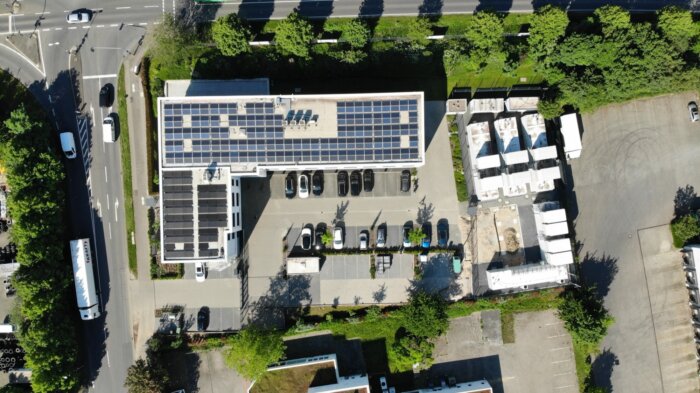
PUE values at class level, waste heat utilization, ISO 50001 – a practical look at the Green-IT strategy 2026/2027 from synaforce.
Key Takeaways
- PUE 1,12 / 1,13: synaforce achieves 2024 and 2025 values at hyperscale benchmark level and thus clearly undershoots the upcoming EnEfG thresholds.
- Hofkirchen II in planning: Liquid Cooling, modern battery storage, and targeted waste heat feed-in into neighboring buildings.
- 100% renewable electricity + own PV: three photovoltaic systems (four in final expansion), solar generation in Mainz, charging infrastructure at the sites.
Related:Platform Engineering for Compliance: IDPs enforce NIS2 and DORA / Computex 2026: AMD invests 10 billion in Taiwan
The discussion about data center energy consumption has reached a new sharpness in 2026. Artificial intelligence drives the load and density requirements per rack into areas that were considered special cases only a few years ago. At the same time, the Energy Efficiency Act (EnEfG) sets binding, measurable requirements for PUE values, waste heat utilization, and the share of renewable energy for the first time. For data center operators, this means: anyone who cannot deliver today what will be mandatory tomorrow will become very visible in tenders and audits.
How a growing mid-market provider positions itself in this situation shows the Bavarian high‑end data center specialist synaforce. The company operates sites in Hofkirchen (HK I) and Mainz, currently planning a new construction with Hofkirchen II (HK II) and has aligned its energy goals for 2026/2027 along a line that can be summed up succinctly: efficiency is not a marketing claim but a metric.
HK II: Liquid Cooling, Battery Storage – and waste heat that leaves the data center
The new construction of Hofkirchen II is conceptually tailored to the load profiles of the next hardware generation. At its core stands a new generation of liquid cooling systems (Liquid Cooling), supplemented by modern battery storage. Particularly interesting, however, is an aspect that extends beyond site boundaries: the waste heat that inevitably arises in a data center with high utilization is not to be released unused into the surroundings. Instead, synaforce plans to feed this targeted into neighboring buildings to partially meet their heat demand. From a business perspective, the energy that is generated anyway – an ecological and regulatory double lever that precisely aligns with the EnEfG obligation for waste heat utilization.
Power Supply: 100% verifiable green electricity, own PV generation, e-mobility
All locations – HK I, Mainz and prospective HK II – are supplied with 100% verifiable green electricity. In addition, there are three photovoltaic systems (four in final expansion) and own solar power generation at the Mainz site. Charging infrastructure for employee, customer and partner e-mobility is a fixed component of site planning at the relevant locations. This is not a symbolic project, but part of a consistent logic: energy flows are not only measured but also designed.
PUE 1,12 to 1,13 – and the meaning of this number
The PUE value (Power Usage Effectiveness) measures the ratio between the total energy of a data center and the energy actually consumed for IT load. Values around 1,0 are the theoretical optimum, industry standard is values between 1,4 and 1,6. synaforce reports a PUE of 1,12 (2024) and 1,13 (2025) for its sites – values that are already well below the upcoming thresholds of the EnEfG today and sit at the level of international hyperscale benchmarks. The methodological framework for this is provided by an energy management system according to DIN EN ISO 50001.
Resource responsibility begins before the rack
Efficiency in operation is one side. The other is procurement. synaforce has reorganized its own procurement process so that when selecting each product, the question of a more environmentally friendly alternative is systematically asked – from server to climate technology to consumables. This shifts sustainability from the chapter ‘Reporting’ to the chapter ‘Procurement’ – and thus to where it becomes measurable and effective.
Conclusion: Lifecycle instead of point in time
What characterizes synaforce’s overall strategy is less a single flagship project than a consistent lifecycle perspective: site selection, architecture, power source, cooling, waste heat, procurement, operation. For the market, this stance is more than a differentiating factor – it is the only sustainable answer to a regulation that will become stricter in the coming years. Whoever grows today without growing their energy balance will have to explain in detail tomorrow why.
Frequently Asked Questions
What does the PUE value say about a data center?
The PUE value (Power Usage Effectiveness) measures the ratio between the total energy of a data center and the energy actually consumed for the IT load. Values around 1.0 are the theoretical optimum, industry‑typical are 1.4 to 1.6.
What does the Energy Efficiency Act (EnEfG) require from operators?
The EnEfG sets binding, measurable requirements for PUE values, waste heat utilization, and the share of renewable energy for the first time. Anyone who does not meet these requirements today will become very visible in tenders and audits.
How does synaforce utilize waste heat from data centers?
In the new Hofkirchen II building, the waste heat generated is intended to be fed directly into neighboring buildings to partially meet their heat demand. This makes the energy that is generated ecologically and regulatorily twice as effective.
What role does ISO 50001 play in the energy balance?
The energy management system according to DIN EN ISO 50001 provides the methodological framework for the stated PUE values. It makes efficiency statements verifiable, documented, and traceable for auditors.
What does life-cycle thinking mean in data center operations?
Instead of focusing on individual flagship projects, synaforce considers site selection, architecture, energy source, cooling, waste heat, procurement, and operation as an integrated system. Sustainability thus shifts from reporting to purchasing.
ABOUT SYNAFORCE
The Bavarian high‑end data center and managed security provider synaforce with locations in Hofkirchen and Mainz stands for high‑performance, secure and sustainable data center infrastructure “Made in Germany”.
Image source: synaforce / Data Center Hofkirchen
Translated from the German original using artificial intelligence. The German version is authoritative.


