

Kubernetes-FinOps: The Levers That Close 70 Percent of Cluster Waste
40 to 70 percent of Kubernetes resources go unused. Four levers can close the waste-right-sizing comes first.
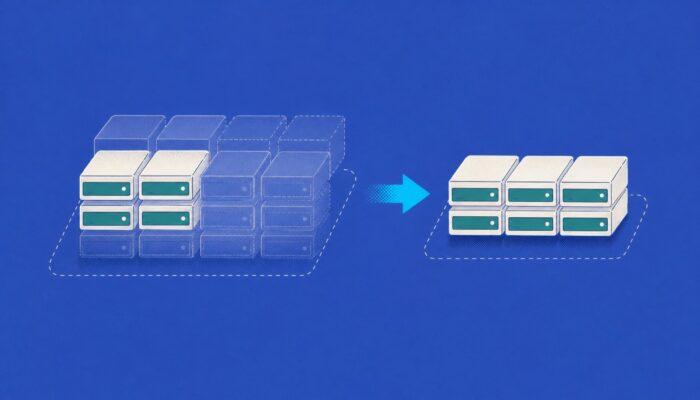
40 to 70 percent of provisioned Kubernetes compute resources sit idle. If platform engineers fail to correct requests, they keep paying for empty seats that no autoscaler can optimize away. The four levers that truly matter follow a fixed sequence-Right-Sizing first, everything else builds on that foundation.
Key Takeaways
- Waste is a range, not a fixed value: 40 to 70 percent of K8s compute resources go unused. Measure before you optimize-the range shows where the lever lies in your own cluster.
- Right-Sizing is the foundation: Without corrected CPU and memory requests, downstream levers multiply wrong values. HPA, Karpenter, and Spot pools then compute on faulty definitions.
- KEDA for event-driven workloads: Scale-to-zero on idle pays off for queue-based services, not for always-on APIs with constant latency demands.
- Karpenter is the newer alternative to Cluster Autoscaler: Direct node provisioning without a node-group intermediary, more flexible for dynamic workload types.
Related:FinOps: Realistically cut cloud costs by 30 percent / What the Cilium upgrade can trim from your cluster
Why Right-Sizing is the linchpin
Requests and limits form the bedrock on which every downstream lever calculates. Ignore them and jump straight to Karpenter or Spot, and you’re optimizing on a faulty foundation. HPA scales to the wrong thresholds. Karpenter provisions the wrong node types. Spot pools get mis-sized. Without corrected requests, no subsequent lever can operate cleanly.
Right-Sizing fixes the definition itself. It answers, per workload, how much CPU and memory are truly needed instead of relying on rules of thumb or default values. VPA in recommendation mode supplies the baseline-auto mode belongs in production only with a solid drain strategy. Pulling requests against actual utilization once per quarter shuts the biggest source of waste before any autoscaler even stirs.
Scale-to-zero with KEDA for event-driven workloads
KEDA extends the Horizontal Pod Autoscaler with external triggers like Kafka, SQS, or RabbitMQ. While HPA reacts to CPU or memory thresholds, KEDA scales to queue depth or event rate and scales workloads to zero when idle. For services that only operate on events, this is the cleanest lever against perpetual idle capacity.
KEDA isn’t a universal fix. Always-on APIs with constant latency requirements gain nothing from scale-to-zero because cold starts break the SLA. Use it for event-driven services with clear idle phases-batch workers, asynchronous processing, webhook consumers. Deploy KEDA where HPA is the right answer, and you’ll pay with instability instead of savings.
Cluster Autoscaler or Karpenter-dynamically adding nodes
Cluster Autoscaler is battle-tested and works on node groups. It adds nodes when pods are pending and scales back when load drops. Karpenter provisions nodes directly without a node-group intermediary and is the newer, more flexible option for dynamic workload types.
The choice hinges on cluster strategy and provider maturity. Karpenter is primary support on EKS and available in another form on GKE. Teams clinging to fixed node groups and conservative migrations stay with Cluster Autoscaler. Those wanting to mix node types dynamically per workload gain flexibility Karpenter delivers by design-something Cluster Autoscaler simply can’t offer.
Spot and Preemptible VMs – the Risky Trade-off
Spot VMs slash costs for fault-tolerant workloads such as batch jobs, CI runners or asynchronous workers. The prerequisite is clean preemption tolerance: PodDisruptionBudgets, graceful shutdown and replica distribution across multiple nodes. Skip this check and you risk replica loss with every preemption wave.
Spot makes sense only where a sudden pod loss doesn’t break the application. Stateful services, latency-critical APIs and single-replica workloads do not belong on Spot. The clean separation by workload type is the decisive factor – a cluster that pushes everything onto Spot exchanges cost savings for reliability.
Order and Measurement – What Should Kick in When
The order is not optional. First, establish the metrics foundation (kube-metrics, VPA recommendations); then use right-sizing as the baseline. On the corrected values, apply HPA and KEDA for workload scaling. Karpenter or cluster autoscalers provision nodes that match the workload demand. Spot VMs cut costs on workloads that tolerate preemption. CUDs and managed layers such as Autopilot represent commitment or convenience layers, respectively, and come last.
Flip this sequence and you’re flying blind. Spot without corrected requests hits the wrong workloads. Karpenter without right-sizing delivers the wrong node types. The discipline is to do the groundwork first – and in Kubernetes that’s rarely glamorous, yet economically the strongest lever.
Frequently Asked Questions
When to use KEDA instead of HPA?
For external triggers such as Kafka, SQS or RabbitMQ. HPA remains the right answer for CPU- or memory-based scaling. KEDA only pays off for event-driven workloads with clear idle phases, not for always-on APIs with constant latency demands.
Karpenter or cluster autoscaler on existing GKE or EKS?
Choose Karpenter for dynamic node types and when the provider offers primary support (EKS). Opt for cluster autoscaler with fixed node groups and conservative migration. The decision hinges on cluster strategy, not taste.
Is VPA safe in recommendation mode?
Yes, for the initial measurement of actual resource usage. The auto mode has no place in production without a drain strategy. Recommendation mode supplies the data foundation for clean right-sizing without actively interfering with pods.
Are 70 percent waste figures realistic or marketing fluff?
It’s a range from 40 to 70 percent, not a fixed number. Your own cluster can land anywhere in that band. Measure actual utilization against requests before adopting a figure from a study – it’s guidance, not a diagnosis.
Does Goldilocks help with right-sizing?
Goldilocks visualizes VPA recommendations as resource-request suggestions and is a good entry point if you lack your own metrics pipeline. For mature setups, VPA in recommendation mode plus a quarterly check against real utilization often suffices.
Editor's Picks
cloudmagazinFinOps: Realistically cutting cloud costs by 30 percentcloudmagazinWhat the Cilium upgrade can cut in your clustercloudmagazinIngress-NGINX end-of-life: The path to Gateway APIMore from the MBF Media Network
Image source: AI-generated (July 2026)
Translated from the German original using artificial intelligence. The German version is authoritative.


