

Quantum Computing, AI, and Cyberattacks: What the IT Channel Must Prepare for Now
AI is reshaping workflows, cyberattacks are growing easier to execute, and emerging technologies like quantum cryptography are moving closer to real-world deployment.
4 min. read
AI is reshaping workflows, cyberattacks are growing easier to execute, and emerging technologies like quantum cryptography are moving closer to real-world deployment. For MSPs, system integrators, and security professionals, the pressure is mounting – not just to monitor these technological developments, but to assess them early and translate them into concrete strategies.
Key Takeaways
- Quantum cryptography is becoming a strategic priority: Today’s encryption standards may no longer hold up once quantum computing reaches maturity. The channel must prepare customers for new security requirements well in advance.
- AI adoption rarely fails because of the tool: Success with AI depends on clarity of context and clean structure. The conversation is shifting from “Which AI?” to “How do humans and AI work together effectively?”
- Cybersecurity starts in everyday life: Many risks don’t stem from zero-day exploits but from tampered cables, open ports, and unsecured devices. NIS2 is adding further pressure on top of that.
Related:GTIA DACH Forum: Reviving Partnerships / Platform Engineering Is No Longer a DevEx Project
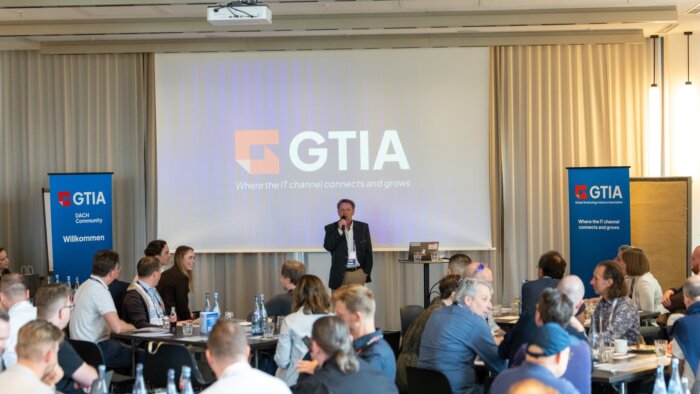
That was precisely the focus of the GTIA DACH Community Forum in Munich. Rather than the usual vendor presentations, the agenda centered on technological developments, security challenges, and open dialogue about real-world issues. Around 90 representatives from across the IT channel discussed which technologies are reshaping the market today – and what that means for businesses and their customers.
What is GTIA? The Global Technology Industry Association is a global, vendor-neutral community organization for the IT channel, emerging from the former CompTIA Community. It brings together MSPs, system integrators, vendors, and distributors – free of sales agendas and traditional vendor interests. Across the DACH region, GTIA regularly organizes community events, working groups, and forums covering security, AI, and business model questions.
When Encryption Needs to Be Rethought
This became strikingly clear right at the start of the event. Walter Hölblinger offered a glimpse into the world of quantum cryptography – less a deep dive into theoretical physics than an exploration of a strategic question: what happens to today’s encryption standards once quantum computing reaches commercial maturity?

Hölblinger walked the audience through how quantum key exchange works and why eavesdropping attempts become physically detectable. The technology isn’t yet ready for broad deployment, but the direction is unmistakable: security concepts that are considered standard today may simply not be sufficient in a few years’ time. For the channel, this creates a clear imperative – helping customers prepare for new security requirements before those requirements arrive.
The AI discussion revealed a similar dynamic: many companies are only now beginning to grasp the real-world implications of the technology. In a workshop on psychology, communication, and prompting, Nils Söder and Paula Glatter made the case that successful AI adoption goes far beyond picking the right tool. What truly matters, they argued, is contextual clarity, precise language, and well-structured prompts – principles that apply equally to human communication and to working with generative AI.
The conversation is shifting. The question is no longer “which AI should we use?” but “how can people and AI work together meaningfully?” That shift in perspective ran like a thread through much of the day’s discussion.
Cybersecurity Doesn’t Start in the Data Center
Cybersecurity was another dominant theme – and not just in the conventional IT-security sense. The focus was on the new attack surfaces embedded in everyday life. Henry Werner drove this point home with a live demo titled “Hack or get hacked.” He showed how attackers can gain access to corporate systems through tampered cables, open network ports, or unsecured devices – sometimes within seconds, using freely available tools.
The key takeaway: many risks don’t stem from highly sophisticated zero-day exploits but from the absence of basic protective measures. Cybersecurity, it turns out, doesn’t begin in the data center – it begins at doors, desks, and routine daily processes.
Alongside this, participants engaged in intense debate about implementing the NIS2 directive. A lack of awareness, economic pressure, and unclear requirements are currently holding many companies back. At the same time, pressure is growing on MSPs and IT service providers to support their customers not just technically, but increasingly in a strategic advisory capacity on security matters.
Technology Alone Is No Longer Enough
One overarching observation stood out: technical topics are now deeply intertwined with organizational and human questions. The closing keynote by Michael Ćaćić-Escalera picked up precisely this thread. His focus was communication and leadership in the age of AI – because the more complex technologies become, the more critical it is to provide clear direction, communicate intelligibly, and guide organizations through change effectively.
The GTIA DACH Community Forum made one thing above all clear: the biggest challenges facing the IT channel today are not driven by individual technologies in isolation. What will ultimately matter is how companies learn to connect technological developments, security requirements, and human collaboration into a coherent whole.
Frequently Asked Questions
Why is quantum cryptography already relevant for the IT channel today?
Even though quantum computing is not yet widely available, today’s encryption methods are already considered insufficient for a world where quantum capabilities have reached maturity. Anyone looking to retain customers long-term should be weaving this topic into consulting and architecture discussions now – before regulatory pressure or a concrete incident forces the agenda.
What separates successful AI adoption from failed tool rollouts?
Successful teams invest in clarity around tasks, responsibilities, and data context before they even select tools. Where generative AI fails, that structure is usually missing. Tool selection is the final step, not the first.
What does “Hack or get hacked” mean in practice for mid-market customers?
Many successful attacks today begin with tampered USB devices, unsecured network ports in meeting rooms, or endpoints without disk encryption. An MSP that only hardens the data center while leaving branch offices, workplaces, and employee hardware exposed is shifting the attack surface, not closing it.
Image source: Alex Schelbert
Translated from the German original using artificial intelligence. The German version is authoritative.


