

200 kW per Rack: firstcolo’s Liquid-Cooling New Build in Rosbach
firstcolo is building FRA7 in Rosbach: about EUR 250 million, 16 MW of IT load, up to 200 kW per rack. Density, PUE and waste heat shape planning.
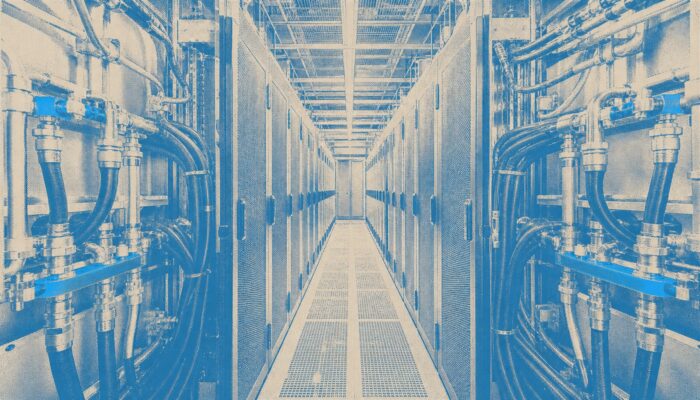
firstcolo has started building FRA7 in Rosbach vor der Höhe: about EUR 250 million, 24 megawatts of total power, up to 200 kilowatts per rack. Two figures show where data centers are headed in the coming years. One is rack density. The other is the pledge to provide the waste heat to the city free of charge for at least 20 years.
Key takeaways
- 200 kilowatts per rack: FRA7 reaches this density with in-row liquid cooling. Air-cooled racks in the same building are specified up to 30 kilowatts. Anyone planning space for AI load must factor in liquid cooling from the start.
- PUE of 1.2 at most, 100 percent green power: FRA7 is designed to the exact values the Energy Efficiency Act sets for new data centers. High density with liquid cooling makes those values easier to hold in operation.
- Waste heat free to the city for 20 years: The law requires new data centers to reuse a minimum share of energy. It does not require free supply over two decades.
Related:EnEfG (Energy Efficiency Act) amendment eases PUE limits for data centers / German hyperscaler: who really has substance
Rosbach Becomes firstcolo’s Largest Site
To date, firstcolo operates the Werkhaus and AOC data centers in Frankfurt. The city is home to DE-CIX Frankfurt, Europe’s largest internet exchange by peak throughput. According to firstcolo, FRA7 in Rosbach vor der Höhe connects directly to the exchange and is the provider’s largest build to date: 7,728 square meters of IT space in eight whitespace modules on 18,000 square meters of total area. firstcolo broke ground on 15 June 2026, and go-live is planned for 2027. According to construction partner SPIE, the build-out will run in several phases through the end of 2028.
“With FRA7 we are investing in Germany for the long term and building the infrastructure for the next generation of digital applications,” says founder and managing director Jerome Evans. FRA7 is designed for cloud, AI and high-performance computing. Alongside that it offers classic colocation with racks, cages and private suites. Regional utility OVAG holds 20 percent of the project company. In August, infrastructure investor CVC DIF also agreed to acquire a majority stake in firstcolo from Cube Infrastructure Managers.
| Metric | Value | Meaning |
|---|---|---|
| Investment | about EUR 250 million | according to firstcolo, one of the most significant investments in digital infrastructure in Hesse |
| Power | 24 MW total, of which 16 MW IT load | IT load is the figure tenants actually use |
| Rack density | up to 200 kW liquid-cooled, air-cooled up to 30 kW | tiered cooling for AI clusters and classic colocation |
| Efficiency | PUE of 1.2 at most (target) | matches the legal requirement for new builds |
| Area | 7,728 m² IT space, 18,000 m² total | eight whitespace modules |
| Energy | 100 percent green power, rooftop photovoltaics | legally required from 2027 for all data centers, on a net basis |
| Waste heat | free of charge to the city of Rosbach for at least 20 years | basis for a future municipal heat supply |
| Certifications | planned, including EN 50600 Availability Class 3, ISO 27001, ISO 50001 | attestations for KRITIS (critical infrastructure) and enterprise customers |
200 Kilowatts Need Different Cooling
According to the Uptime Institute (Global Data Center Survey 2025), typical rack density in data centers averages just under 9 kilowatts, and 7.5 kilowatts if high-density sites are excluded. More than 80 percent of operators have no rack above 30 kilowatts. FRA7’s 200 kilowatts set a different benchmark. Air can no longer remove that heat from the rack.
firstcolo therefore tiers the cooling: air up to 30 kilowatts, water cooling in the 19-inch rack up to 50 kilowatts, in-row liquid cooling up to 130 kilowatts, and high-density racks up to 200 kilowatts. For comparison, a current AI rack of the NVIDIA GB200 NVL72 type draws 125 to 135 kilowatts according to the Supermicro data sheet and is liquid-cooled through cold plates on the chips. FRA7 therefore has headroom for the next GPU generation.
For tenants, that has an awkward consequence. Anyone who leases or builds space today for the next ten years is deciding the cooling architecture. A site cooled only by air can fall short for GPU clusters quickly. Retrofitting is possible, but it means work on pipe routes, the floor and fire protection. It rarely matches the density of a new build. FRA7 shows the pattern of many current projects: high-density liquid-cooling zones beside classic air-cooled space in the same building.
The Waste-Heat Pledge Goes Beyond the Law
The second notable point is not in the power figures. firstcolo will provide waste heat to the city of Rosbach free of charge for at least 20 years. Together with further partners, the city is examining how it can use the heat for a climate-friendly heat supply. Mayor Steffen Maar sees “a special opportunity” in it.
The framework is set out in Section 11 of the Energy Efficiency Act. Data centers that start operation from 1 July 2026 must reach an annual average PUE of 1.2 at most within two years of commissioning. There is also a minimum share of reused energy: 10 percent, 15 percent if operation starts from July 2027, and 20 percent from July 2028. From 2027, electricity must come entirely from renewable sources on a balance basis. On PUE and green power, FRA7 is planned exactly to that line. On waste heat, the Rosbach pledge goes further: the law sets quotas and allows agreements with the municipality, including a price term. It does not require free supply for 20 years.
Technically, liquid cooling supports the concept. It delivers heat at a higher temperature than the exhaust air of an air-cooled hall. A heat network still usually needs a heat pump to raise the temperature. The law expressly excludes from the PUE any electricity for equipment that only upgrades the waste heat.
On 24 June 2026 the federal cabinet adopted an amendment to the Energy Efficiency Act that would loosen the rules. The PUE of 1.2 for new builds would remain, but the deadline for reaching it would rise from two to four years. 100 percent green power would become mandatory only from 2030, and new exceptions would be added for waste heat. The Bundestag debated the draft in first reading on 24 September. Until it enters into force, the existing law applies. If the loosening passes, green power from the start of operation and the free waste-heat pledge would go beyond the legal minimum.
What high density delivers
- More compute on the same floor area
- Shorter paths, lower latency between nodes
- Better efficiency if the cooling keeps up
What high density requires
- Liquid cooling in the rack row or directly on the chip
- Higher demands on power feed and redundancy
- A recipient for the waste heat, even in summer
What Tenants Should Ask Before Choosing Space
FRA7 represents a trend. As AI load pushes rack densities up, cooling decides who can take that load. A site with no option for liquid cooling can age faster than its depreciation allows.
firstcolo also shows that efficiency and waste heat can be more than compliance. Cooling architecture and the waste-heat concept therefore belong on the first page of the requirements. Tenants looking for space should ask for three figures: maximum density per rack with liquid cooling, the design PUE, and how the waste heat is used.
Common Questions
What is firstcolo’s FRA7?
A new data center in Rosbach vor der Höhe, north of Frankfurt. Ground was broken on 15 June 2026, and go-live is planned for 2027. Investment is about EUR 250 million, with 24 megawatts of total power at 16 megawatts of IT load, and 7,728 square meters of IT space. It is designed for cloud, AI and high-performance computing.
Why does 200 kilowatts per rack stand out?
According to the Uptime Institute, typical rack density in data centers averages just under 9 kilowatts. 200 kilowatts can be removed only with liquid cooling. FRA7 tiers cooling from air up to 30 kilowatts through to liquid-cooled high-density racks at 200 kilowatts.
What is the 20-year waste-heat pledge about?
firstcolo will provide waste heat to the city of Rosbach free of charge for at least 20 years. With partners, the city is examining how to use the heat for a climate-friendly heat supply. The Energy Efficiency Act requires new data centers to reuse a minimum share of energy. It does not require giving that heat away free.
What does PUE say about efficiency?
Power usage effectiveness (PUE) relates a data center’s total power demand to the power used by IT. A value of 1.2 means 0.2 kilowatt-hours for cooling and infrastructure for every kilowatt-hour used by servers. firstcolo is planning FRA7 for 1.2 at most. That is the legal requirement for data centers starting operation from July 2026.
Editor's Picks
cloudmagazinKRITIS in the Cloud: Securing Migration to C5 and NIS2cloudmagazinThe Cheap Cloud Chip with the Costly ExitcloudmagazinGerman Hyperscaler: Who Really Has the SubstanceHeader image source: AI-generated (July 2026)
Translated from the German original using artificial intelligence. The German version is authoritative.


