

Data Center in Space? Google’s Chips Fly Only as a Test
Google is sending four AI chips into orbit on 1 October. The first flight will test whether the hardware survives launch, radiation and heat.
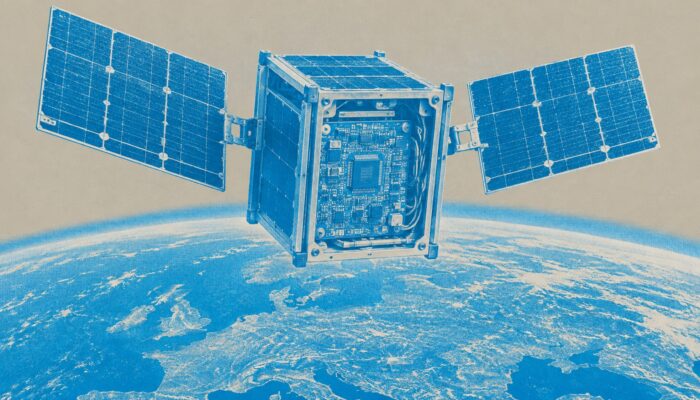
Google is sending four AI chips into orbit on 1 October. In the long run, the company wants to operate data centers there that run on solar power. The first flight answers a more modest question: whether the chips can survive launch, radiation and heat.
Key takeaways
- Google is launching a test satellite with four AI chips on 1 October. It is flying on SpaceX’s Transporter-18 mission and will collect operational data.
- According to Google, there is up to eight times as much solar power in orbit as on the ground. Google uses this figure to justify putting data centers in space.
- According to reporting by the New York Times, the chips can compute for only 15 minutes at a time. After that, they must shut down to cool off.
Related:Google Ties TPU Payback to Five-Year Contracts / DGX B200: Plenty of Performance, High Price for the Site
One Satellite, Four Chips, One Test Flight
On 1 October 2026, SpaceX will carry the Transporter-18 rideshare mission into space on a Falcon 9. On board is a prototype built by Google and Planet, the Earth-observation operator. It carries four Tensor Processing Units, or TPUs. Google uses these chips for AI computations in its data centers.
The project is called Project Suncatcher. Travis Beals leads it within Google’s research department, Paradigms of Intelligence. In his announcement of 24 September, he sums up the goal of the flight in a single question: Can the AI hardware actually work in space?
What is Project Suncatcher? Project Suncatcher is Google’s research initiative for data centers in orbit. The first prototype carries four AI chips and launches with SpaceX on 1 October 2026. It is meant to show whether the hardware can withstand launch and operation in a vacuum.
Sunlight Almost Around the Clock
Google’s argument for orbit is energy. Satellites in low Earth orbit are in sunlight almost continuously. According to Google, they can generate up to eight times as much solar power there as an installation on the ground.
Computing in 15-Minute Bursts
The downside is heat. In a vacuum there is no air to carry heat away. A satellite can only radiate it away.
According to reporting by the New York Times, the chips therefore run for only 15 minutes at a time and then shut down to cool. The satellite reportedly has around one kilowatt of electrical power.
“Can our AI hardware work in space?”
Travis Beals, Google, announcement of 24 September 2026
The Constellation Won’t Arrive Before 2027
A data center only emerges once many satellites work together. Google plans two more test satellites for 2027. They are meant to show whether satellites can connect to each other with high bandwidth.
Later generations, according to Heise, are expected to carry dozens of accelerators and communicate with each other by laser.
Gartner Calls the Idea Madness
Earlier this year, Gartner analysts called orbital data centers the “peak of madness”. They see three hurdles: the cost of transporting hardware into space, the data link back to Earth, and cooling in a vacuum.
The test flight will deliver initial data on the third hurdle. Google plans the next step for 2027.
Frequently Asked Questions
Does Google itself say how long the chips can run?
No. The 15-minute figure comes from reporting by the New York Times. Google describes the flight as a test of whether the hardware works in space.
Can companies already run compute in space?
No. Google is not announcing any offering for the prototype. Anyone who needs AI compute still depends on data centers on the ground.
What are Gartner’s objections to data centers in space?
Gartner cites transport costs, the data link to Earth, and cooling. Google has not yet presented any cost calculation for these.
More from the MBF Media Network
MyBusinessFutureWhen a German AI model actually pays offDigital ChiefsTech groups back 260 billion euros in AI debtSecurityTodayGlass chips: Less cooling demand in the data centerImage source: AI-generated (September 2026)
Translated from the German original using artificial intelligence. The German version is authoritative.


