

Tech Giants Continue Investing in Mini Nuclear Reactors and Fusion Energy
Due to AI’s enormous energy demands, nuclear power – in the form of small modular reactors – is experiencing a global revival. Nvidia, for instance, is investing in a startup originally founded …
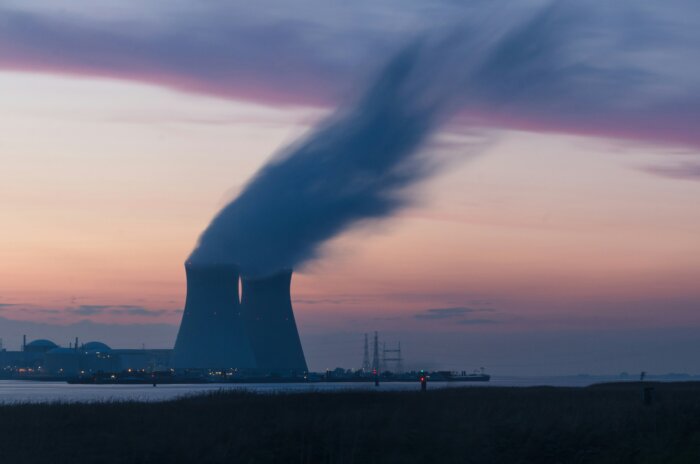
Due to AI’s enormous energy demands, nuclear power – in the form of small modular reactors – is experiencing a global revival. Nvidia, for instance, is investing in a startup originally founded and backed by Bill Gates, while Google is attempting to bring the dream of nuclear fusion closer to reality.
Although an increasing share of electricity in Germany now comes from renewable sources, wind, solar, and hydropower remain “unreliable partners.” Sometimes they generate no or insufficient power; other times, they produce too much.
Data centers – and especially AI computing facilities – require ever more dependable energy supplies. This has reignited calls within Germany for a return to nuclear power, despite the fact that even plant operators themselves have declined such proposals.
Mini Nuclear Reactors Promised to Be Safer
Proponents consistently argue that nuclear power is far cleaner than coal or gas plants and could thus help mitigate global climate change. Opponents – still a majority among the German public – point instead to the risks involved, extremely high construction costs, and the unresolved issue of long-term waste storage and disposal.

Mini nuclear power plants are intended to supply data centers with safe and reliable electricity. (Image source: Unsplash / Christina wocintechchat)
These waste issues wouldn’t exist with nuclear fusion, but the anticipated energy output – many times greater than the input required – likely won’t materialize until the 2030s or 2040s. Google aims to accelerate development with support from a startup. Until then, the search giant is pursuing a dual-track strategy on nuclear energy and plans to source electricity for its data centers from mini nuclear reactors by 2030.
Small Modular Reactors (SMRs) are said to be significantly cheaper and safer, producing far less fissile waste. This has sparked interest from hyperscalers and major data center operators like AWS, who are now investing directly in SMR projects.
Nvidia Invests in Gates-Backed Startup
For example, U.S. company Nvidia has invested through its venture capital arm, NVentures, in TerraPower – the nuclear startup founded and supported by Bill Gates. This was reported by t3n, citing an official statement from the U.S. startup.
CEO Chris Levesque stated that “innovations in nuclear science can have positive, global impacts” and emphasized that TerraPower offers “carbon-free solutions.”
TerraPower can hardly be called a startup anymore. Bill Gates launched the Bellevue, Washington-based company back in 2006 and most recently injected around one billion dollars into it in 2024.
The latest funding round – led by Nvidia/NVentures and joined by HD Hyundai – has now added another $650 million. The resulting mini nuclear plant will be more environmentally friendly, sodium-cooled, and designed to deliver 345 megawatts of power.
Hope Rests on Nuclear Fusion
Back to Google and its fusion ambitions: According to Michael Terrell, who leads Google’s Advanced Energy division, the company views recent breakthroughs by Commonwealth Fusion Systems (CFS) – an MIT spin-off – with optimism. Google financially supports this startup as well.

Nuclear fusion is seen as the holy grail of clean energy without radioactive waste. (Image source: Unsplash / shubham-dhage)
The prospect of someday unlocking a virtually limitless energy source without radioactive byproducts has driven research since the 1960s. However, as noted, no one has yet succeeded in extracting more energy than is required to initiate – and crucially, sustain – fusion reactions. CFS believes its SPARC demonstration facility in Devens, Massachusetts, is on track to connect the world’s first commercial fusion power plant to the grid in the early 2030s. The plant will use superconducting magnets to control the plasma needed for fusion – a development Google enthusiastically highlighted in a blog post, noting it enables “more compact and economically viable designs.”
Google and Gates Are All In
This likely convinced Google as well. The company – again alongside Bill Gates – first invested venture capital in CFS back in 2018. Neither party is disclosing how much Google contributed this time, but the tech giant has already contractually committed to purchasing 200 megawatts of electricity from a planned commercial reactor in Virginia – roughly half of that facility’s targeted capacity.
Microsoft also signed a 50-megawatt off-take agreement with fusion developer Helion in 2023, with initial power generation expected by 2028. In contrast, German experts and the federal government anticipate commercial fusion power plants no sooner than the mid-2040s.
Header Image Source: Unsplash / Joakim Honkasalo


