

GPU rental without hyperscalers: How good are neo clouds?
Neo clouds rent out H100 GPUs for as little as a third of the Azure price. Loans and billions in debt finance their expansion.
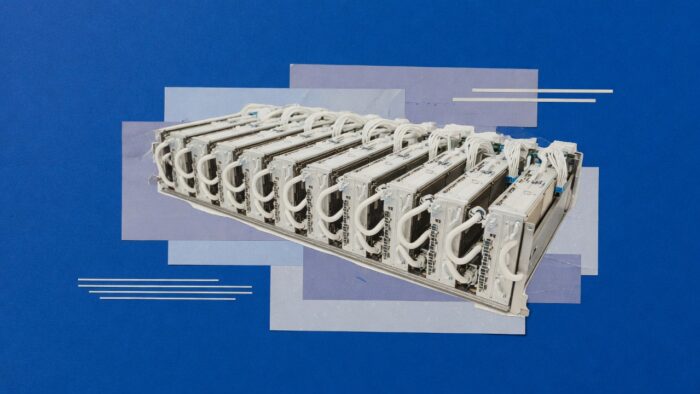
At Lambda, an H100 GPU costs 3.55 euros an hour, against 10.95 euros at Azure, according to the price list of 4 October 2026. Neo clouds such as CoreWeave, Nebius and Lambda offer another option alongside hyperscalers. Several providers expand using secured loans. CoreWeave depends on a few large customers for much of its revenue.
Key takeaways
- Neo clouds rent out primarily GPU compute time, and on the list prices for an H100 hour they sit well below AWS and Azure, though Nebius raised its H100 hourly rate by 17 percent on 1 October 2026.
- As of 30 June 2026, CoreWeave carried debt equivalent to 31.24 billion euros, and Microsoft accounted for roughly 67 percent of CoreWeave’s revenue in 2025.
- European capacity is being created at Telekom in Munich, at Nebius in Finland and France, and in up to seven planned EU gigafactories.
One GPU, many price points
For an hour on an Nvidia H100 GPU, the range on 4 October 2026 is wide. The rates are only comparable to a limited extent. Lambda charges the equivalent of 3.55 euros for the H100 SXM, calculated at the European Central Bank (ECB) reference rate of 2 October 2026. Nebius has been charging the equivalent of 4.01 euros since 1 October 2026, and CoreWeave charges the equivalent of 43.87 euros for a node with eight H100s, which works out at 5.48 euros per GPU. In the US East region, AWS charges the equivalent of 6.13 euros per GPU hour for the p5.48xlarge instance with eight H100s, according to the price tracker Vantage as of 3 October 2026. For the Azure VM ND96isr H100 v5, AzureSpeed lists the equivalent of 10.95 euros per GPU hour as of 26 September 2026 for Linux with usage-based billing in East US.
Scaleway has been charging 25.332 euros per hour for a node with eight H100 SXM since 1 June 2026, which works out at 3.17 euros per GPU. OVHcloud lists the H100 as a PCIe card at 2.80 euros net, while Lambda and Scaleway quote the SXM form factor.
The Synergy Research Group describes neo clouds as specialized platforms with GPU-centric infrastructure for AI. They sell primarily GPU compute time. They do not replicate the breadth of a hyperscaler catalog. Synergy put the group’s revenue in the second quarter of 2025 at more than the equivalent of 4.45 billion euros, an increase of 205 percent over the second quarter of 2024. For 2030, the research firm expects just under 160 billion euros. By the end of April 2026, Synergy already attributed 5 percent of the global cloud infrastructure market to neo clouds.
A neo cloud is a cloud provider that specializes in GPU compute time for AI training and inference and does not replicate the breadth of a hyperscaler such as AWS, Azure or Google Cloud; well-known representatives include CoreWeave, Nebius, Lambda, Crusoe and Nscale.
How the low prices are financed
CoreWeave generated revenue equivalent to 2.29 billion euros in the quarter through 30 June 2026, up from 1.08 billion euros a year earlier. According to the quarterly report, the operating loss came to 44 million euros and net interest expense to 570 million euros. The four debt items on the balance sheet added up to the equivalent of 31.24 billion euros as of the reference date. Its remaining contractual performance obligations amount to 92.38 billion euros, with 41 percent expected to become revenue in the 24 months through June 2028.
Revenue is concentrated among a few buyers. In its 2025 annual report, CoreWeave names Microsoft at roughly 67 percent of annual revenue. In the second quarter of 2026, 36 percent came from the largest customer and 26 percent from the second largest. For its technology equipment, CoreWeave assumes a useful life of six years.
On 1 October 2026, Lambda closed a loan equivalent to 898 million euros at 6.78 percent interest, secured by the financed GPU servers and the contractual cash flows from three deployments to two creditworthy buyers. Nscale, based in London, signed a GPU-backed credit facility equivalent to 1.25 billion euros on 12 February 2026. At the same time, Meta is planning a cloud business to sell surplus AI computing capacity, according to Reuters. cloudmagazin has classified this as a risk to CoreWeave and Nebius.
On 1 October 2026, Nebius raised the H100 hour from the equivalent of 3.43 to 4.01 euros, and the B200 from 6.37 to 7.57 euros. On 17 September 2026, CoreWeave reported short-duration contracts of three to six months at roughly 36 million euros in revenue per megawatt per year.
European GPU capacity
For sensitive data, it is worth looking at the provider’s location and contracting entity. Nebius is based in Amsterdam and operates EU regions in Finland and France; for customer data in these regions, the Dutch Nebius B.V. is listed as a sub-processor. A data center with 75 megawatts is running in Mäntsälä, and in Lappeenranta Nebius is planning up to 310 megawatts with first capacity in 2027.
In Germany, Telekom brought its Industrial AI Cloud in Munich’s Tucherpark into operation on 4 February 2026. The facility comprises almost 10,000 Blackwell GPUs from Nvidia; at launch, more than a third of the capacity was in use, including by Agile Robots and PhysicsX. In the SOOFI project, Leibniz University Hannover is training an open language model with around 100 billion parameters there.
The European Commission issued a call for up to seven AI gigafactories on 30 July 2026, with up to 10 billion euros in public funds. Proposals may be submitted until 12 November 2026, and Germany is among the 18 participating states.
With US providers, the legal question remains. The CLOUD Act obliges providers of electronic communication or remote computing services to hand over data in their possession or under their control, even when the data is located outside the United States. Whether a European subsidiary is covered must be examined legally on a case-by-case basis.
What a neo cloud is good for
Neo clouds suit workloads with plenty of GPU time and little dependency on other cloud services: model training, fine-tuning and batch inference. If an application is closely tied to the databases, identity services and storage of a hyperscaler, the price advantage shrinks because of data transfer and running both environments. For cost control across multiple providers, cloudmagazin has published a guide to FinOps for AI inference.
From a procurement perspective, three points should be addressed in the contract. First, an exit clause covering the return of data, backed by the EU Data Act, whose provider-switching rules have applied since 12 September 2025. Second, a look into the financial reports of listed providers, especially customer concentration and debt maturities. Third, a second provider for the same workload, so that a single outage or a price change alone cannot endanger the project.
Frequently Asked Questions
What does an H100 GPU hour cost at neo clouds compared with AWS and Azure?
According to the pricing pages of 4 October 2026, the H100 costs the equivalent of 3.55 euros at Lambda, 4.01 euros at Nebius and 5.48 euros per GPU when calculated in the eight-GPU node at CoreWeave. Price trackers put it at 6.13 euros on AWS on demand in US East and at 10.95 euros on Azure in East US.
What risks do neo clouds pose for enterprise customers?
Lambda and Nscale finance their expansion through GPU-backed loans, CoreWeave through secured and unsecured debt. As of 30 June 2026, CoreWeave carried debt equivalent to 31.24 billion euros, and the largest customer accounted for 36 percent of revenue in the second quarter.
Is there GPU cloud capacity located in Germany?
Since 4 February 2026, Telekom has been operating its Industrial AI Cloud in Munich, an AI factory with almost 10,000 Nvidia Blackwell GPUs. Nebius offers EU regions in Finland and France, where the Dutch Nebius B.V. is listed as a sub-processor.
Editor's Picks
cloudmagazinMistral Supplies Microsoft with European GPUscloudmagazinAWS and Nvidia: GPU Surge Forces Platform Teams to AdaptcloudmagazinGoogle Links TPU Payback to Five-Year ContractsMore from the MBF Media Network
Digital ChiefsAI cloud commitments: Capex pace turns uncomfortableHeader image source: AI-generated (October 2026)
Translated from the German original using artificial intelligence. The German version is authoritative.


